
How to track channel incentive ROI in real time for maximum partner engagement

Sign up for our newsletter for trending top content!
Introduction
Forrester reports that companies with real-time incentive tracking achieve up to 30% higher partner engagement and sales performance compared to those relying on manual reporting. Delays in tracking rewards, opaque processes, and inconsistent reporting reduce partner trust and diminish ROI.
For Sales Leaders, the ability to measure channel incentive ROI in real time is critical for optimising spend, identifying top-performing partners, and driving measurable business outcomes.
This article explores the key strategies, tools, and frameworks that enable real-time ROI tracking, ensuring incentives deliver maximum impact.
Why do most channel incentive programmes fail to track ROI effectively?
Many B2B incentive programmes fail because they rely on manual spreadsheets, delayed approvals, or disconnected data sources. Deloitte’s 2026 Channel Incentives Survey found that 43% of organisations struggled to evaluate ROI due to poor tracking systems.
Common pitfalls include:
- Complex eligibility criteria causing reporting delays
- Lack of integration between CRM, ERP, and reward systems
- Inconsistent or delayed payout approvals
Framework for improvement:
The 3C model—Clarity, Consistency, Control:
- Clarity: Ensure incentive rules and KPIs are clear to all partners.
- Consistency: Apply rules uniformly across regions and partner tiers.
- Control: Use automated dashboards to monitor performance and prevent errors.
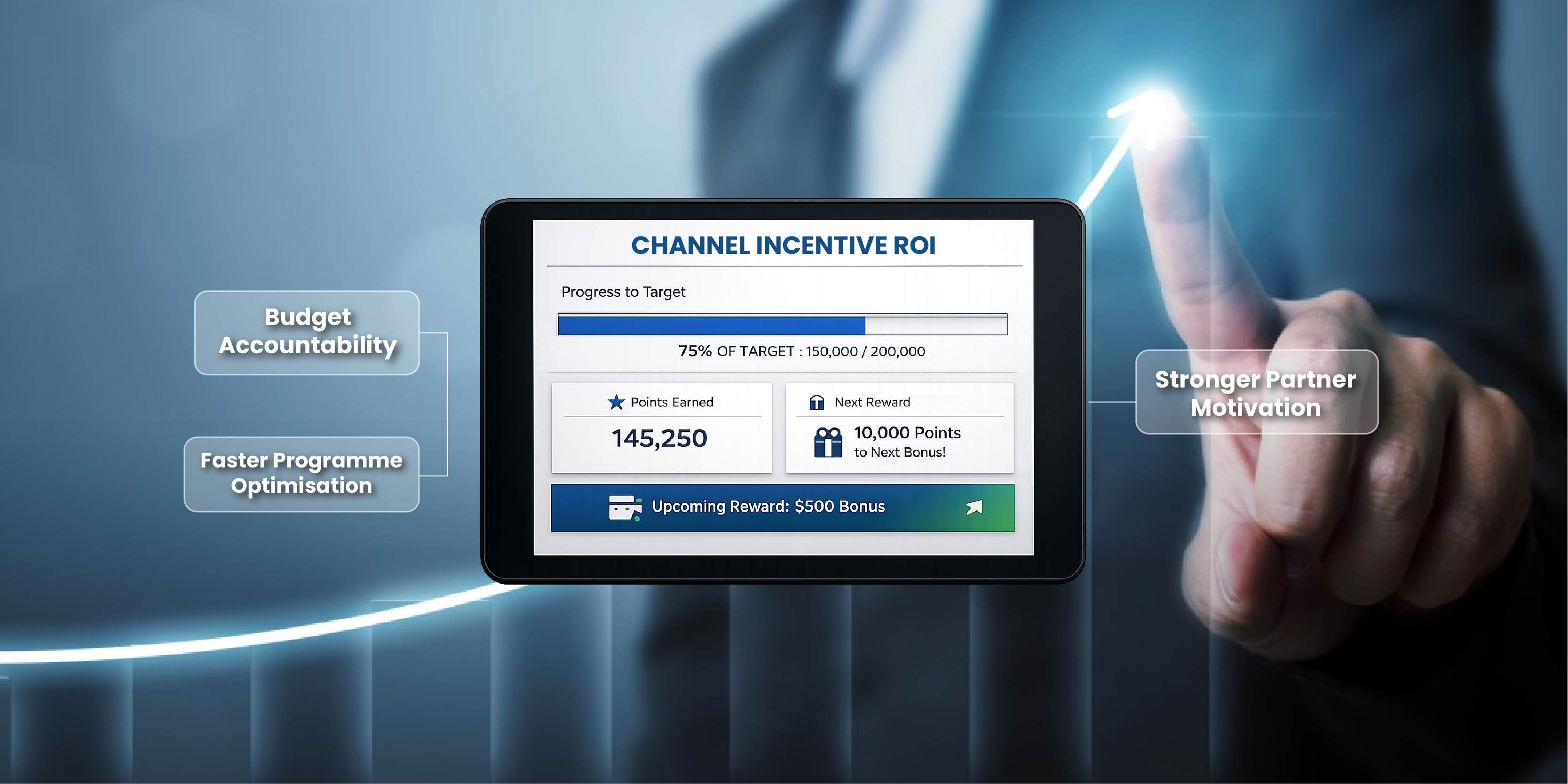
Automation and real-time reporting, such as those offered by Paytives, allow Sales Leaders to maintain transparency and adjust programmes dynamically, improving ROI and partner satisfaction.
How can real-time tracking improve decision-making?
Real-time tracking enables Sales Leaders to identify high-performing partners, optimise budget allocation, and adjust campaigns instantly. Aberdeen Group reports that organisations with live incentive dashboards see 20% higher incentive utilisation and reduced overspend.
Key benefits of real-time ROI tracking include:
- Immediate visibility into campaign performance
- Faster identification of underperforming partners
- Data-driven adjustments to reward thresholds and tiers
- Enhanced transparency improving partner trust
Comparison: Manual vs Real-time Tracking
Using platforms like Paytives, Sales Leaders can integrate CRM and ERP data for instant insights, allowing rapid, informed adjustments to channel incentive programmes.
Which KPIs should Sales Leaders track for channel incentive ROI?
Key KPIs provide a holistic view of programme effectiveness. Forrester recommends tracking both financial and behavioural metrics:
Financial KPIs:
- Incremental revenue generated
- Average deal size influenced by incentives
- ROI on incentive spend
Behavioural KPIs:
- Partner participation rates
- Engagement with training or certification programmes
- Timeliness and completeness of claim submissions
Decision guide: The Balanced KPI Framework
- Input KPIs: Programme enrolment and spend
- Output KPIs: Sales achieved, new customer acquisition
- Outcome KPIs: Partner retention, engagement, and advocacy
Monitoring these KPIs in real time allows Sales Leaders to prioritise high-value partners and recalibrate incentives where ROI is underperforming.
How can technology simplify real-time ROI tracking?
Manual reporting introduces errors and delays. NASSCOM reports that automation reduces incentive management errors by up to 70%.
Technology enables:
- Real-time dashboards to monitor partner performance
- Automated approval workflows for faster payouts
- Integration of multiple data sources (CRM, ERP, incentive programme)
- Alerts for anomalies or underperformance
Practical approach:
- Connect incentive platforms to CRM and ERP systems.
- Define KPIs and targets within the platform.
- Provide partners with transparent dashboards to view progress.
- Use analytics to guide next-period programme adjustments.
Platforms like Paytives offer built-in dashboards for tracking ROI, ensuring incentives are distributed fairly and spend is optimised.
Frequently asked questions
What KPIs should I track for channel incentive ROI?
Track financial KPIs like incremental revenue and ROI on spend, as well as behavioural KPIs like partner engagement, participation, and claim timeliness. A balanced KPI view ensures a full understanding of programme effectiveness.
How does real-time tracking improve outcomes?
Real-time dashboards allow Sales Leaders to identify top-performing partners, adjust incentives promptly, and correct underperformance immediately, leading to higher ROI and stronger partner engagement.
What tools can Sales Leaders use to monitor incentive ROI?
Automated platforms like Paytives integrate CRM and ERP data, provide dashboards, and manage payouts to track ROI efficiently and accurately.
Can real-time ROI tracking increase partner satisfaction?
Yes. Transparent dashboards, timely reward processing, and clear KPIs build trust and motivation, which NASSCOM research shows can improve engagement by up to 25%.
Conclusion
Real-time tracking of channel incentive ROI empowers Sales Leaders to make data-driven decisions, optimise programme spend, and increase partner engagement. By leveraging automation and dashboards, organisations can improve transparency, reduce errors, and maximise ROI.
Platforms like Paytives streamline these processes, providing a scalable solution to monitor and enhance channel incentives continuously.
See how Paytives dashboards provide real-time tracking for channel incentive ROI and optimise partner programmes.
Explore the features today.
https://www.therewardstore.com/paytives/features
Sign up for our newsletter for trending top content!


