
Short-Term vs Long-Term Channel Incentives: When Should Sales Leaders Use Each Model?

Sign up for our newsletter for trending top content!
Introduction
The Incentive Research Foundation reports that non-cash channel programmes have increased total revenues by 32%, market share by 30% and net operating income to 19% of revenue in selected case studies. Those results show why channel incentives deserve strategic attention, but they also raise a practical question for sales leaders: should incentives focus on short-term sales sprints or long-term partner loyalty?
The answer depends on the behaviour you want to change. Sprint contests can create urgency around a product, quarter or territory. Structured programmes can build repeat participation, partner capability and predictable performance. This article compares short-term vs long-term channel incentives, explains when to use each model, shows which metrics matter and positions Paytives as a platform for scalable partner incentives and payouts.
Why Do Short-Term Channel Incentives Work for Sales Sprints?
Short-term channel incentives work because they create urgency, focus and a clear reward window. Sales leaders use them when they need partners to act quickly, such as clearing inventory, launching a new product, improving quarter-end performance, activating a dormant region or driving a specific campaign.
McKinsey states that sales incentives should persuade sales teams towards behaviours that support the go-to-market strategy. It also reports that smart revisions to compensation models have had a 50% higher impact on sales than changes in advertising investments. The same principle applies to indirect sales when incentives direct partners towards specific and measurable actions.
Where Sprint Contests Work Best
Short-term incentives need simple rules. Partners should know what to sell, who qualifies, what they earn and when rewards are paid. If the rules require too much interpretation, the sprint loses momentum.
The risk is overuse. Too many contests train partners to wait for the next promotion instead of building steady commitment.
When Should Sales Leaders Use Long-Term Channel Incentive Programmes?
Sales leaders should use long-term channel incentive programmes when the goal is sustainable partner loyalty, capability building and repeat performance. These programmes work best when partners need ongoing motivation to prioritise your brand, invest in product knowledge, improve customer coverage or grow share of wallet.
Bain notes that channel partners help B2B suppliers reach parts of the market more economically, but partner profitability and commitment vary significantly. Suppliers therefore need to understand which partners create long-term value and how to increase commitment from the right ones.
Where Long-Term Programmes Work Best
Long-term incentives should reward more than revenue. They should also recognise behaviours that create future revenue, such as training, lead registration, customer retention, accurate reporting and strategic product adoption.
McKinsey’s B2B growth research found that companies using more channels can see bigger market share gains, but omnichannel growth requires coordination. Long-term incentive programmes help sales leaders coordinate partner behaviour across channels, markets and product priorities.
Short-Term vs Long-Term Channel Incentives: What Is the Real Difference?
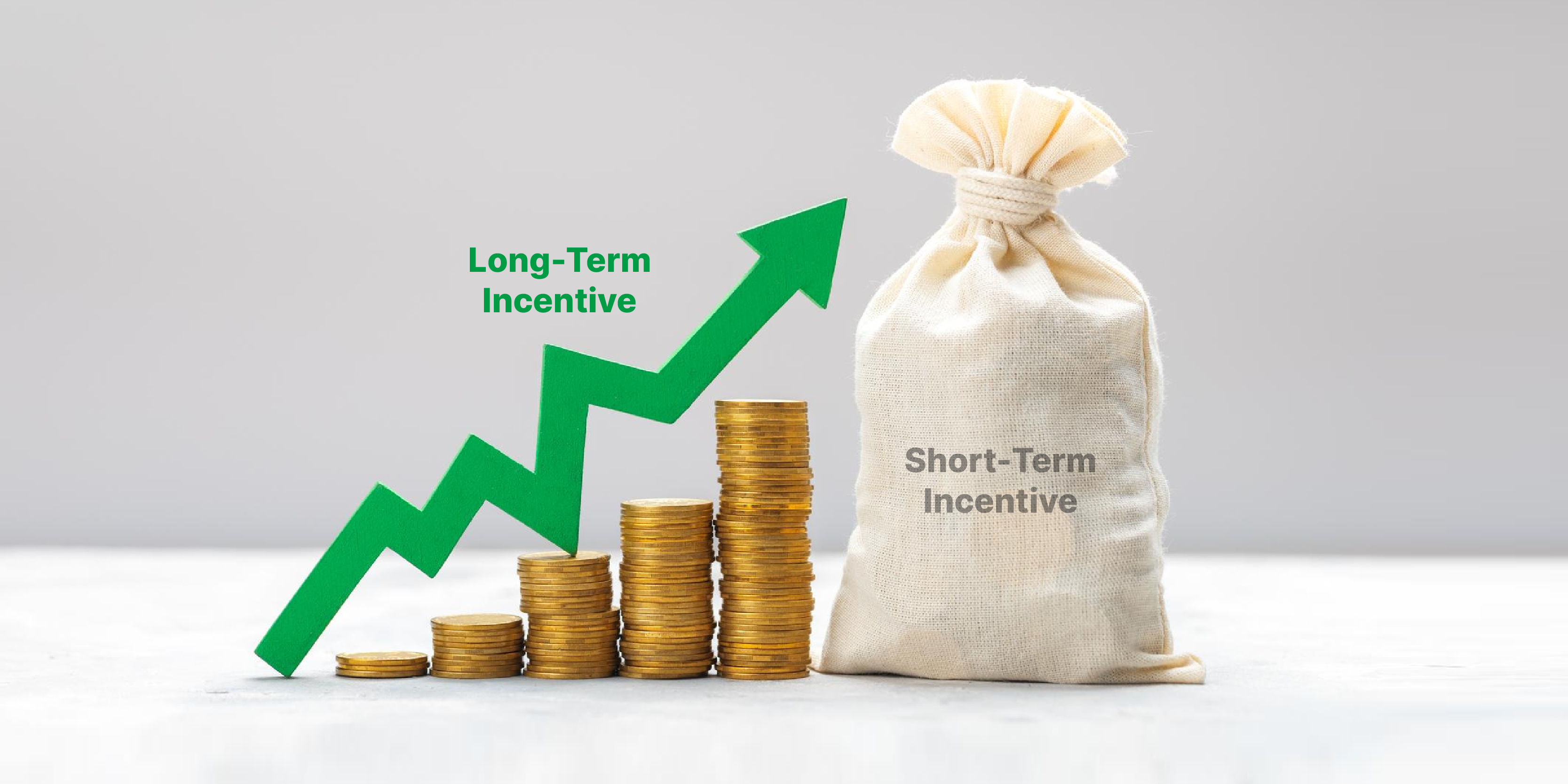
The real difference is the time horizon and behaviour being shaped. Short-term incentives create immediate action. Long-term incentives create repeat commitment. Both can work, but each fails when used for the wrong objective.
Short-Term vs Long-Term Incentive Comparison
The Incentive Research Foundation states that effective channel programme design should prioritise fairness and connection. That is especially important in long-term programmes because partners need to trust the rules over repeated cycles.
Sales leaders should avoid a false choice. Strong channel strategies use both models. Sprint contests create momentum. Structured programmes convert that momentum into lasting partner participation.
What Drives Sustainable Channel Partner Loyalty?
Sustainable channel partner loyalty comes from predictable value, transparent rules, fair rewards, useful support and performance visibility. Partners rarely stay loyal because of one campaign. They stay engaged when the programme helps them grow profitably and reduces friction.
Bain’s channel sales optimisation guidance stresses the need for intentional, data-driven partner prioritisation, including an understanding of partner selling power, capability development and share of wallet. That means loyalty should focus on the partners that can grow with the business, not only those who respond to the latest incentive.
The PARTNER Framework
Reward relevance also matters. Paytives connects channel incentive journeys to The Reward Store’s integrated storefront, including gift cards from 5,000+ brands, flight bookings, hotel bookings, dining, golf, sports, experiences, merchandise, bus bookings and concierge services. This helps sales leaders offer partner rewards that suit different roles, markets and motivation profiles.
When Should You Use Sprint Contests vs Structured Programmes?
Sales leaders should use sprint contests when the business needs rapid action and a short measurement window. They should use structured programmes when the business needs durable behaviour change, partner retention and stronger forecasting.
Sprint Contest vs Structured Programme Decision Guide
McKinsey’s sales incentive research warns that incentives should guide desired behaviours, not simply pay for any activity. The right model therefore starts with behaviour design, not reward selection.
A practical approach is to use sprint contests as diagnostic tools. If a short contest proves that partners respond to a product, segment or reward mechanic, sales leaders can convert that learning into a longer-term tier, milestone or growth programme.
How Should Sales Leaders Measure Short-Term and Long-Term Incentive ROI?
Sales leaders should measure short-term incentives with campaign metrics and long-term programmes with relationship economics. A sprint contest may succeed if it drives immediate sales uplift. A long-term programme should prove partner retention, share of wallet, capability growth and incremental gross margin.
The Incentive Research Foundation’s channel case studies show that well-designed non-cash channel programmes can produce revenue and market share gains, but these results depend on effective programme design and measurement.
Incentive ROI Dashboard
A simple ROI formula is:
Channel incentive ROI = incremental gross margin minus programme cost
Programme cost should include reward spend, platform cost, administration, communication, finance operations and fulfilment. Sales leaders should compare participating partners with similar non-participating partners wherever possible.
Paytives can help teams track incentives, payouts and reward engagement more systematically. Sales leaders can explore Paytives Features, Paytives Overview and The Reward Store Blogs for related resources.
How Can Paytives Support Both Short-Term and Long-Term Channel Incentives?
Paytives supports both short-term contests and structured channel programmes by helping sales teams manage partner incentives, payout workflows and reward journeys. This matters because incentive strategy fails when execution is slow, unclear or hard to measure.
For short-term contests, Paytives can support campaign-based incentives, leaderboard-style engagement, claim workflows and reward fulfilment. For long-term programmes, it can support milestone rewards, tiered achievement, ongoing partner payouts and performance visibility.
Paytives Use Cases
Bain’s channel guidance emphasises partner prioritisation and incentive allocation as part of data-driven ecosystem growth. Paytives supports that discipline by giving sales leaders a clearer way to connect partner actions, incentive rules and reward outcomes.
The goal is not simply to pay partners faster. It is to make incentives clearer, more trusted and easier to optimise.
Frequently Asked Questions
What are short-term channel incentives?
Short-term channel incentives are time-bound rewards designed to drive immediate partner action. Sales leaders commonly use them for product launches, quarterly pushes, seasonal campaigns, partner reactivation and inventory movement.
How are long-term channel incentives different?
Long-term channel incentives reward sustained partner performance over months or years. They often use tiers, milestones, growth targets, training rewards and loyalty benefits to build deeper partner commitment.
When should sales leaders use sprint contests vs structured programmes?
Use sprint contests when the goal is urgent action within a short window. Use structured programmes when the goal is sustainable partner loyalty, capability building, share of wallet growth or predictable annual performance.
What drives sustainable channel partner loyalty?
Sustainable channel partner loyalty comes from clear rules, timely payouts, relevant rewards, fair measurement, useful training and predictable growth opportunities. Bain’s channel guidance stresses data-driven partner prioritisation and incentive allocation, which helps sales leaders invest in partners with real growth potential.
Can Paytives support both short-term and long-term incentives?
Yes. Paytives can support short-term channel contests, milestone incentives, partner payout workflows and structured reward programmes. It helps sales teams connect partner performance to meaningful rewards and payout visibility.
How should channel incentive ROI be measured?
Measure incremental gross margin, sales uplift, partner participation, claim approval time, product mix improvement, reward redemption, partner retention and share of wallet. Compare participating partners with similar non-participating partners wherever possible.
Conclusion
Short-term and long-term channel incentives serve different commercial purposes. Sprint contests create urgency around immediate goals. Structured programmes build partner loyalty, capability and predictable growth. The strongest channel strategies use both, supported by clear rules, timely rewards, partner segmentation and ROI discipline. McKinsey, Bain and the Incentive Research Foundation all point to the same principle: incentives work when they guide specific behaviours and support measurable growth.
The future of channel performance will be more data-led, partner-specific and reward-flexible. Sales leaders who balance quick wins with long-term loyalty will protect partner mindshare and improve indirect sales outcomes.
Ready to manage sprint contests and long-term partner programmes from one incentive system?
Explore how Paytives helps sales leaders run channel incentives, track performance and deliver meaningful partner rewards at scale.
Explore Paytives Features for Channel Incentives
Sign up for our newsletter for trending top content!


