
How Should Marketing Leaders Manage Earn and Burn Ratios in Loyalty Programmes?

Sign up for our newsletter for trending top content!
Introduction
Deloitte’s 2024 Consumer Loyalty Survey found that four out of five consumers value flexibility when earning and redeeming rewards, while 86% rate financial rewards, simplicity and ease of use as important or very important loyalty programme attributes. That makes earn and burn ratios a commercial design issue, not a finance-only calculation.
For marketing leaders, the earn rate decides how quickly customers see value. The burn rate decides whether they can use that value easily. If customers earn too slowly, the programme feels weak. If customers burn too easily without profitable behaviour, margins suffer. This article explains how to calculate earn and burn ratios, what redemption rate indicates programme health, how to calculate breakage and how Rekyndl helps brands manage loyalty mechanics through automated journeys and reward redemption.
Why Do Earn and Burn Ratios Matter in Loyalty Programmes?
Earn and burn ratios matter because they control the value exchange between the brand and the customer. The earn ratio defines how customers collect points or value. The burn ratio defines how customers redeem that value. Together, they shape perceived generosity, redemption behaviour, financial liability and long-term loyalty.
McKinsey argues that loyalty programmes can create greater value when brands integrate loyalty design with pricing strategy and customer value management. That matters because earn and burn mechanics influence both customer behaviour and commercial cost.
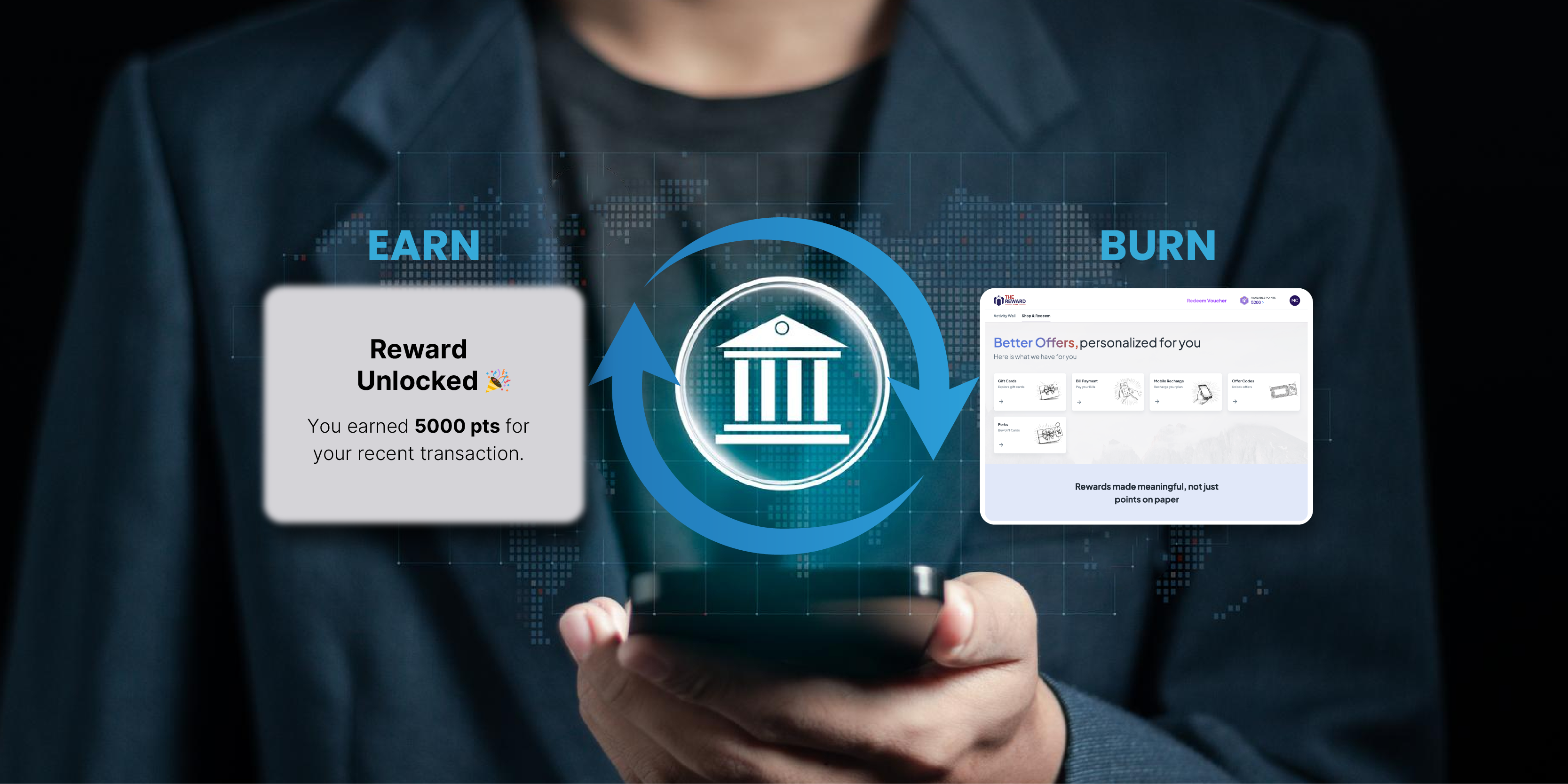
Earn Ratio vs Burn Ratio
A loyalty programme should not maximise earn or burn in isolation. It should encourage profitable behaviours, create visible value and keep reward cost within a controlled model.
The best earn and burn ratios give customers a reason to return without teaching them to buy only when points or rewards are available.
What Is a Good Earn and Burn Ratio?
A good earn and burn ratio depends on margin, customer lifetime value, purchase frequency, category expectations and redemption cost. There is no universal ratio that works across banking, retail, travel, fintech, healthcare, consumer services and B2B loyalty. A low-margin category may need a conservative earn rate. A premium or high-frequency category may support richer earning if it improves retention.
Bain’s retention research gives marketing leaders the economic context. A 5% increase in retention can increase profits by 25% to 95%, which means loyalty costs can be justified when they create measurable retention or lifetime value improvement.
Earn and Burn Ratio Decision Guide
A useful starting question is: “What customer behaviour are we paying for?” If the answer is repeat purchase, the earn ratio should reward frequency. If the answer is retention, burn should make accumulated value easy to use before disengagement appears.
Marketing leaders should test ratios by cohort rather than applying one broad rule to every customer.
How Do You Calculate Breakage in a Loyalty Programme?
Breakage is the value of rewards that customers earn but never redeem. It can reduce short-term cost, but high breakage can damage loyalty if customers feel the programme is difficult to use. Forrester states that brands need behavioural and emotional metrics together to measure true loyalty, because transaction data alone cannot explain why customers stay or leave.
Basic Breakage Formula
Breakage rate = unredeemed points or reward value divided by total issued points or reward value
For example:
Breakage should not be treated as free profit. A high breakage rate may mean customers do not understand the programme, cannot find relevant rewards, face redemption friction or do not see enough value.
Breakage Interpretation Guide
The right breakage target depends on financial modelling. Marketing should review breakage with finance, but it should also monitor satisfaction, redemption feedback and post-redemption behaviour.
What Redemption Rate Indicates Programme Health?
A healthy redemption rate shows that customers understand, value and use the loyalty programme. There is no single perfect percentage across sectors, but the pattern matters. Rising redemption among high-value or repeat customers usually signals stronger engagement. Low redemption, especially among active earners, often signals friction.
Deloitte’s loyalty research shows why redemption matters. Consumers value simplicity, ease of use and flexibility when earning and redeeming rewards. If redemption is difficult, the programme fails at the moment when customers expect value to become real.
Redemption Health Dashboard
Forrester notes that consumers expect more than a brand’s best discount and often want relevant perks, special treatment and emotional value from loyalty programmes. That means redemption health should measure both usage and perceived value.
A healthy programme should not simply push customers to redeem everything quickly. It should create regular, satisfying redemption moments that lead to repeat behaviour, retention and stronger customer preference.
How Should Brands Balance Earn Generosity With Burn Control?
Brands should balance earn generosity with burn control by linking points to profitable behaviours and offering redemption choice within clear financial rules. If earn is too generous, customers may collect value without improving profitability. If burn is too restrictive, customers may feel misled and disengage.
McKinsey’s personalisation research states that consumers associate personalisation with positive experiences that make them feel special. Loyalty programmes can apply this by tailoring earn and burn mechanics to customer stage, value and preference.
The BALANCE Framework
The Reward Store’s integrated storefront helps brands support varied burn preferences through categories such as gift cards from 5,000+ brands, flight bookings, hotel bookings, dining, golf, sports, experiences, merchandise, bus bookings and concierge services.
A well-balanced loyalty programme should make customers feel rewarded while giving finance confidence that programme value remains controlled.
How Can Rekyndl Help Manage Earn and Burn Mechanics?
Rekyndl helps marketing teams manage earn and burn mechanics by connecting loyalty rules, customer journeys, automation and redemption analytics. Through Rekyndl Features, brands can design loyalty journeys that encourage customers to earn through defined behaviours and burn through relevant reward options.
Rekyndl can support use cases such as:
- First purchase earn triggers.
- Repeat purchase points.
- Tier-based earning.
- Dormant customer reactivation rewards.
- Redemption reminders.
- Points balance nudges.
- Reward category personalisation.
- Campaign-level earn accelerators.
- Burn journeys linked to lifecycle stage.
McKinsey highlights that loyalty programmes can deliver more value when brands manage loyalty as part of a broader growth and pricing strategy. Rekyndl supports that approach by helping marketers move beyond isolated campaigns into structured earn, burn and redemption journeys.
Relevant internal resources include Rekyndl Consumer Loyalty Overview, Rekyndl Features and TRS X Storefront API.
The strategic advantage is visibility. Marketing leaders can see which earning behaviours drive redemption, which rewards customers value and which customer segments generate profitable repeat engagement.
What Mistakes Distort Earn and Burn Ratio Performance?
Earn and burn performance often looks healthier than it is when teams measure points issued instead of customer behaviour. A large volume of issued points may indicate activity, but it does not prove loyalty. A high redemption rate may show engagement, but it can also show uncontrolled reward cost if customers redeem without profitable follow-up.
Common Earn and Burn Mistakes
Mistake 1: Setting earn rates without margin modelling.
This can make the programme popular but commercially weak.
Mistake 2: Treating breakage as the goal.
High breakage may reduce liability, but it can also show poor value delivery.
Mistake 3: Hiding redemption rules.
Customers lose trust when burn value feels unclear.
Mistake 4: Offering too few reward categories.
Limited choice lowers perceived value across diverse segments.
Mistake 5: Ignoring points ageing.
Old balances can signal friction, disengagement or future liability.
Mistake 6: Measuring redemption without post-redemption behaviour.
A redemption only becomes strategically valuable when it supports repeat purchase, retention or advocacy.
Forrester’s guidance on loyalty measurement reinforces this point: behavioural data should be measured alongside emotional loyalty indicators to understand why customers stay.
The better question is not “How many points did customers earn?” It is “Which earn and burn journeys changed profitable customer behaviour?”
Frequently Asked Questions
What is a good earn-and-burn ratio in loyalty programmes?
A good earn-and-burn ratio balances customer value with programme profitability. The right ratio depends on margin, purchase frequency, customer lifetime value, redemption cost and the behaviour the brand wants to encourage.
How do you calculate breakage in a loyalty programme?
Breakage rate equals unredeemed points or reward value divided by total issued points or reward value. For example, if a programme issues 10 million points and 3.5 million remain unused or expire, the breakage rate is 35%.
What redemption rate indicates programme health?
A healthy redemption rate shows customers understand and value the programme, but the ideal level varies by sector and margin. Marketing leaders should track redemption rate, time to first redemption, repeat redemption, points ageing and post-redemption purchase behaviour.
Why is high breakage a problem?
High breakage can show that customers do not find the programme useful, cannot redeem easily or do not understand the value. It may reduce short-term cost, but it can weaken trust and reduce long-term loyalty.
How can Rekyndl help optimise earn and burn ratios?
Rekyndl helps brands manage loyalty journeys, earn triggers, redemption nudges, reward category access and performance analytics. It helps marketing teams connect earn and burn mechanics to customer behaviour, redemption and retention outcomes.
When should brands adjust earn and burn rules?
Brands should adjust rules when redemption is too low, reward liability rises, repeat behaviour does not improve or specific customer segments show poor engagement. Changes should be tested by cohort before applying them across the full programme.
Conclusion
Earn and burn ratios decide whether a loyalty programme feels valuable to customers and sustainable for the business. The earn side must motivate profitable behaviour. The burn side must make rewards easy, relevant and measurable. Deloitte, McKinsey, Bain and Forrester all point to the same principle: loyalty works when value, simplicity, personalisation and retention economics align.
The future of loyalty will depend on smarter ratio management, better redemption analytics and more personalised reward journeys. Marketing leaders who master these mechanics will build programmes that customers use, trust and return to.
Ready to manage earn and burn mechanics with better visibility?
Explore how Rekyndl helps marketing teams design loyalty journeys, automate redemption prompts and connect customers to meaningful reward choices.
Explore Rekyndl Earn and Burn Features
Sign up for our newsletter for trending top content!


