
How Large Enterprises Manage Pan India Gift Fulfilment

Sign up for our newsletter for trending top content!
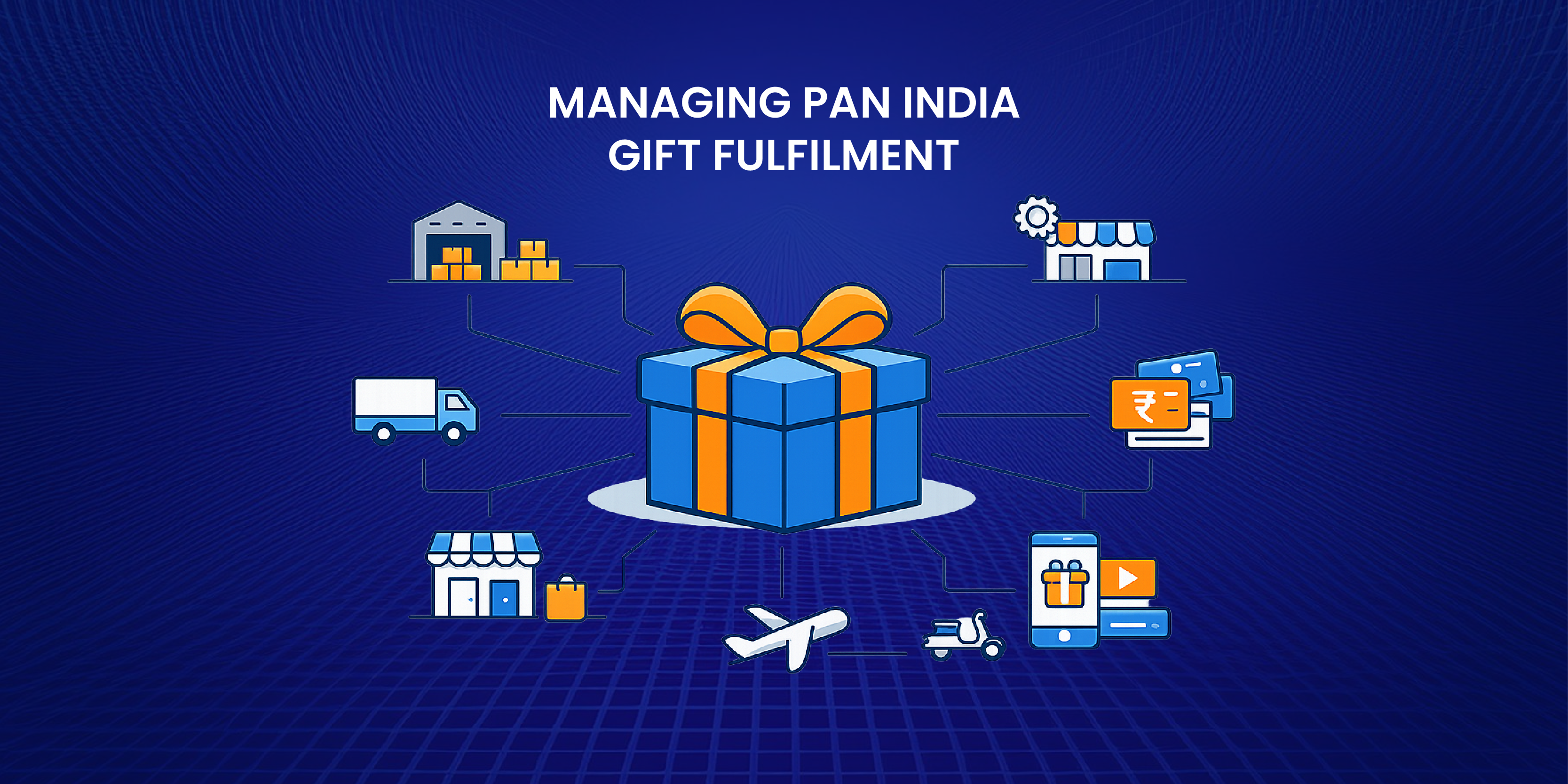
Pan India gift fulfilment is a complex operational exercise that involves logistics coordination, vendor management, inventory planning, and delivery assurance across diverse geographical regions. Large enterprises approach this process with structured systems, multiple vendor partnerships, and technology driven tracking to ensure timely and consistent delivery experiences.
This article explains the key challenges of nationwide gift fulfilment, the risks enterprises must manage, and the best practices that ensure successful execution at scale.
What Is Pan India Gift Fulfilment?
Pan India gift fulfilment refers to the process of sourcing, packaging, dispatching, and delivering gifts to recipients located across multiple cities, towns, and remote locations in India. Large enterprises typically use pan India fulfilment for:
- Employee rewards and recognition programmes
- Sales incentives and channel partner rewards
- Customer loyalty and engagement programmes
- Festival gifting campaigns such as Diwali and New Year
- Milestone and performance based gifting
The objective is simple. Deliver the right gift to the right person at the right time. However, execution at a national scale is operationally complex.
Challenges in Nationwide Gift Fulfilment
1. Logistics and Geographic Complexity
India has a highly varied logistics landscape. Metro cities have reliable courier coverage, while Tier 2, Tier 3, and remote locations often face delivery delays, limited serviceability, and higher shipping costs.
Common logistics challenges include:
- Non serviceable pin codes
- Delivery delays in remote regions
- Reverse logistics for damaged or incorrect items
- High shipping costs for heavy or fragile items
- Festival season courier overload
For large enterprises sending thousands of gifts, even a small failure rate can impact employee satisfaction and brand perception.
2. Vendor and Inventory Management
Large scale gifting requires multiple vendors across categories such as electronics, lifestyle, gift cards, experiences, and merchandise. Managing multiple vendors creates risks such as:
- Stock availability issues
- Inconsistent product quality
- Packaging inconsistencies
- Price fluctuations
- Vendor fulfilment delays
Without a centralised fulfilment partner or platform, managing multiple vendors becomes difficult and time consuming.
3. Delivery Experience and Recipient Satisfaction
The delivery experience is part of the reward experience. Common delivery related risks include:
- Recipients not available at delivery location
- Address errors and incorrect contact details
- Damaged products during transit
- Poor packaging experience
- No delivery tracking visibility
Large enterprises focus heavily on delivery tracking and customer support because a poor delivery experience reduces the perceived value of the reward.
4. Compliance and Financial Controls
Enterprise gifting programmes must also comply with internal procurement policies, taxation requirements, and audit processes. This adds another layer of complexity involving:
- GST compliant invoicing
- Vendor contracts and SLAs
- Budget tracking
- Approval workflows
- Reporting and reconciliation
How Large Enterprises Solve Pan India Fulfilment
Large organisations do not manage fulfilment manually. They use structured fulfilment ecosystems that combine technology, logistics, and vendor networks.
Centralised Fulfilment Platforms
Enterprises use centralised reward and fulfilment platforms that provide:
- A single catalogue across multiple brands
- Real time inventory visibility
- Automated order processing
- Address collection and validation
- Shipment tracking
- Delivery confirmation
- Reporting and analytics
This reduces operational workload and improves fulfilment accuracy.
Multi Vendor and Multi Warehouse Strategy
To reduce delivery time and risk, enterprises use multiple vendors and warehouses located in different regions such as North, South, West, and East India. This helps in:
- Faster delivery timelines
- Lower shipping costs
- Reduced dependency on a single vendor
- Better stock availability
Experience Based Rewards and Digital Rewards
Many large enterprises now shift from physical gifts to digital rewards such as:
- Gift cards
- Experience vouchers
- Travel vouchers
- Brand gift vouchers
- Digital subscriptions
Digital rewards eliminate logistics challenges and allow instant fulfilment across India.
Large Enterprise Use Cases
Employee Rewards Programmes
Large IT and consulting companies reward employees across multiple office locations and remote working locations. They typically use a points based reward system where employees can redeem rewards from a catalogue instead of the company shipping one standard gift to everyone.
This model reduces logistics complexity and improves employee satisfaction because employees can choose their own rewards.
Sales Incentive Programmes
Pharmaceutical, FMCG, and banking companies run sales incentive programmes for distributors and field sales teams located across India. These programmes require reliable delivery to Tier 2 and Tier 3 cities, making vendor network strength critical.
Customer Loyalty Programmes
Banks, insurance companies, and airlines run loyalty programmes where customers redeem points for merchandise, vouchers, or experiences. These programmes require continuous fulfilment throughout the year, not just during festival seasons.
Best Practices for Pan India Gift Fulfilment
Large enterprises follow structured fulfilment practices to ensure success:
1. Use a single fulfilment partner instead of multiple local vendors
This improves standardisation, tracking, and reporting.
2. Offer a catalogue instead of a single fixed gift
Choice based rewards reduce reverse logistics and increase satisfaction.
3. Prioritise serviceable pin code coverage
Always check coverage before finalising physical gifts.
4. Include digital rewards in the catalogue
This ensures instant delivery options for remote locations.
5. Define SLAs for vendors and logistics partners
This ensures accountability and delivery timelines.
6. Plan festival gifting at least 4 to 6 weeks in advance
Courier networks get overloaded during peak seasons.
7. Provide real time tracking and customer support
This significantly improves recipient experience.
8. Track fulfilment metrics
Important metrics include:
- Delivery success rate
- Average delivery time
- Return rate
- Damage rate
- Cost per delivery
The Future of Pan India Gift Fulfilment
Pan India fulfilment is moving towards digital first rewards, marketplace based reward catalogues, and automated logistics tracking. Enterprises are increasingly adopting points based reward systems and reward marketplaces to simplify fulfilment and improve recipient choice.
Companies that invest in strong fulfilment infrastructure, vendor networks, and technology platforms are able to run large scale employee and customer reward programmes efficiently across India.
Conclusion
Pan India gift fulfilment is not just a logistics activity. It is a critical part of the employee and customer reward experience. Large enterprises succeed because they use structured fulfilment systems, strong vendor networks, digital reward options, and clear service level agreements.
Organisations that manage fulfilment well see higher employee engagement, better programme participation, and stronger brand perception. This is why fulfilment strategy is as important as the reward itself.
Sign up for our newsletter for trending top content!


