
Modern employee recognition platform for enterprises: A CXO guide to driving engagement

Sign up for our newsletter for trending top content!
Introduction
Gallup’s 2024 Employee Engagement Report highlights that organisations with formal recognition programmes achieve up to 30% higher employee engagement and retention. For CXOs, investing in a modern employee recognition platform is no longer optional it is a strategic imperative.
This article explores how enterprise-grade recognition platforms drive measurable business outcomes, optimise reward delivery, and enable real-time insights for leadership. It also provides frameworks for evaluating platforms, ensuring alignment with organisational goals, and integrating recognition into broader talent and performance strategies.
Why is modern recognition critical for enterprise performance?
Employee recognition is closely linked to productivity, retention, and overall organisational culture. McKinsey research shows that companies with high recognition maturity experience 22% higher productivity and 18% lower turnover.
Challenges for enterprises include:
- Diverse workforce across geographies and departments
- Remote and hybrid work creating visibility gaps
- Traditional recognition methods being manual and slow
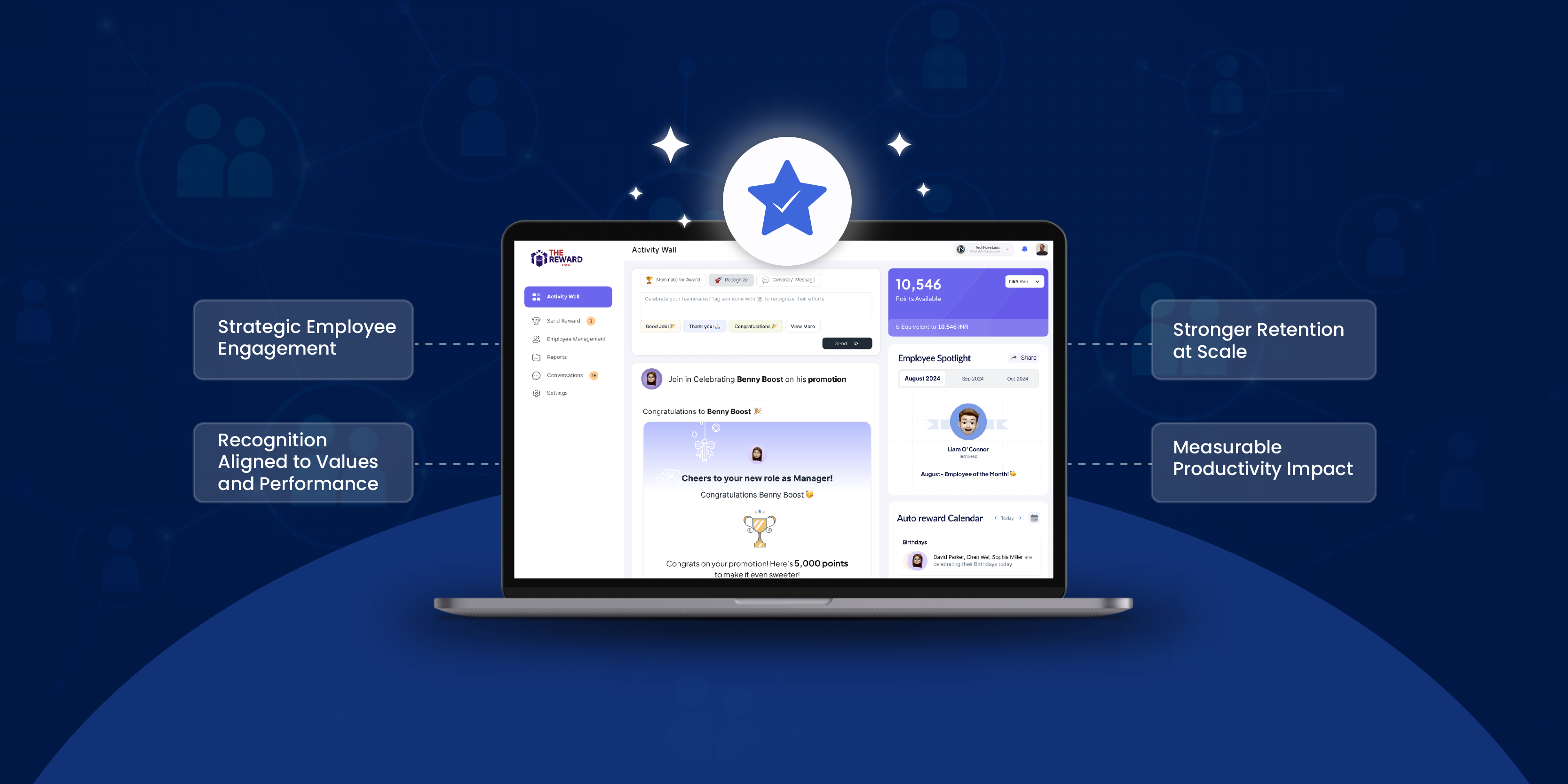
Modern recognition platforms address these by offering:
- Real-time recognition through mobile and web applications
- Integrated reward catalogues covering experiential and tangible options
- Analytics dashboards tracking engagement and ROI
Framework for CXOs: Recognition Impact Model
- Reach: Ensure all employees can be recognised irrespective of location or role
- Relevance: Tie recognition to behaviours that drive business outcomes
- Reward: Provide choice-driven rewards that matter to employees
- Reporting: Generate actionable insights to optimise programmes
How can recognition platforms enhance engagement and retention?
O.C. Tanner reports that employees who feel consistently recognised are 4.6 times more likely to give discretionary effort. Recognition platforms enable this by:
- Providing frequent, timely acknowledgment for individual or team achievements
- Automating milestone celebrations such as anniversaries, promotions, or certifications
- Delivering personalised rewards aligned with employee preferences
Comparison
By leveraging a platform like ApplaudIQ, CXOs can centralise recognition, scale programmes globally, and correlate recognition activity with performance outcomes.
What features should an enterprise recognition platform have?
According to SHRM, key features in high-impact enterprise platforms include:
- Multi-channel delivery: mobile app, web portal, SMS
- Reward catalogues with experiential, gift card, and merchandise options
- Integration with HRIS, payroll, and performance management systems
- Analytics and reporting for leadership dashboards
Decision guide for CXOs: Evaluate platforms based on:
- Employee reach and adoption potential
- Integration complexity and IT requirements
- Reward variety and personalisation
- Real-time analytics and ROI tracking
These criteria ensure that recognition initiatives drive engagement while remaining manageable for enterprise operations.
How do enterprises measure the ROI of recognition programmes?
Real-time analytics allow CXOs to track the business impact of recognition. Deloitte notes that organisations using data-driven recognition platforms see a 20–30% improvement in engagement metrics.
Key KPIs include:
- Participation and nomination rates
- Reward redemption and choice patterns
- Correlation with productivity, retention, and discretionary effort
- Feedback and satisfaction scores from employees
Dashboards from platforms like ApplaudIQ provide visibility into these metrics, enabling CXOs to optimise programmes and demonstrate measurable value to stakeholders.
Frequently Asked Questions
What features should an enterprise recognition platform have?
A robust platform offers multi-channel delivery, personalised reward catalogues, integrations with HRIS and payroll, and real-time analytics for tracking engagement and ROI.
How to evaluate recognition platforms for large organisations?
Assess platforms on reach, scalability, integration complexity, reward personalisation, and analytics capabilities to ensure alignment with enterprise goals.
Why should CXOs invest in a recognition platform?
Recognition drives engagement, retention, and productivity. Platforms automate and scale recognition, enabling measurable business outcomes and supporting organisational culture.
Can ApplaudIQ support global enterprise recognition programmes?
Yes. ApplaudIQ provides mobile and web-based recognition, reward catalogues, and analytics dashboards, helping CXOs implement consistent and measurable recognition at scale. (ApplaudIQ for CXOs)
Conclusion
A modern employee recognition platform is a strategic investment for enterprises, enabling CXOs to drive engagement, retention, and performance. By leveraging platforms like ApplaudIQ, organisations can scale recognition globally, personalise rewards, and generate actionable insights that demonstrate ROI. Enterprises that prioritise recognition build stronger cultures, motivate employees, and achieve measurable business outcomes.
See how ApplaudIQ enables scalable, measurable employee recognition for enterprises. Explore the solution today.
Sign up for our newsletter for trending top content!


