
How loyalty programs reduce acquisition costs in BFSI: insights for marketing leaders

Sign up for our newsletter for trending top content!
Introduction
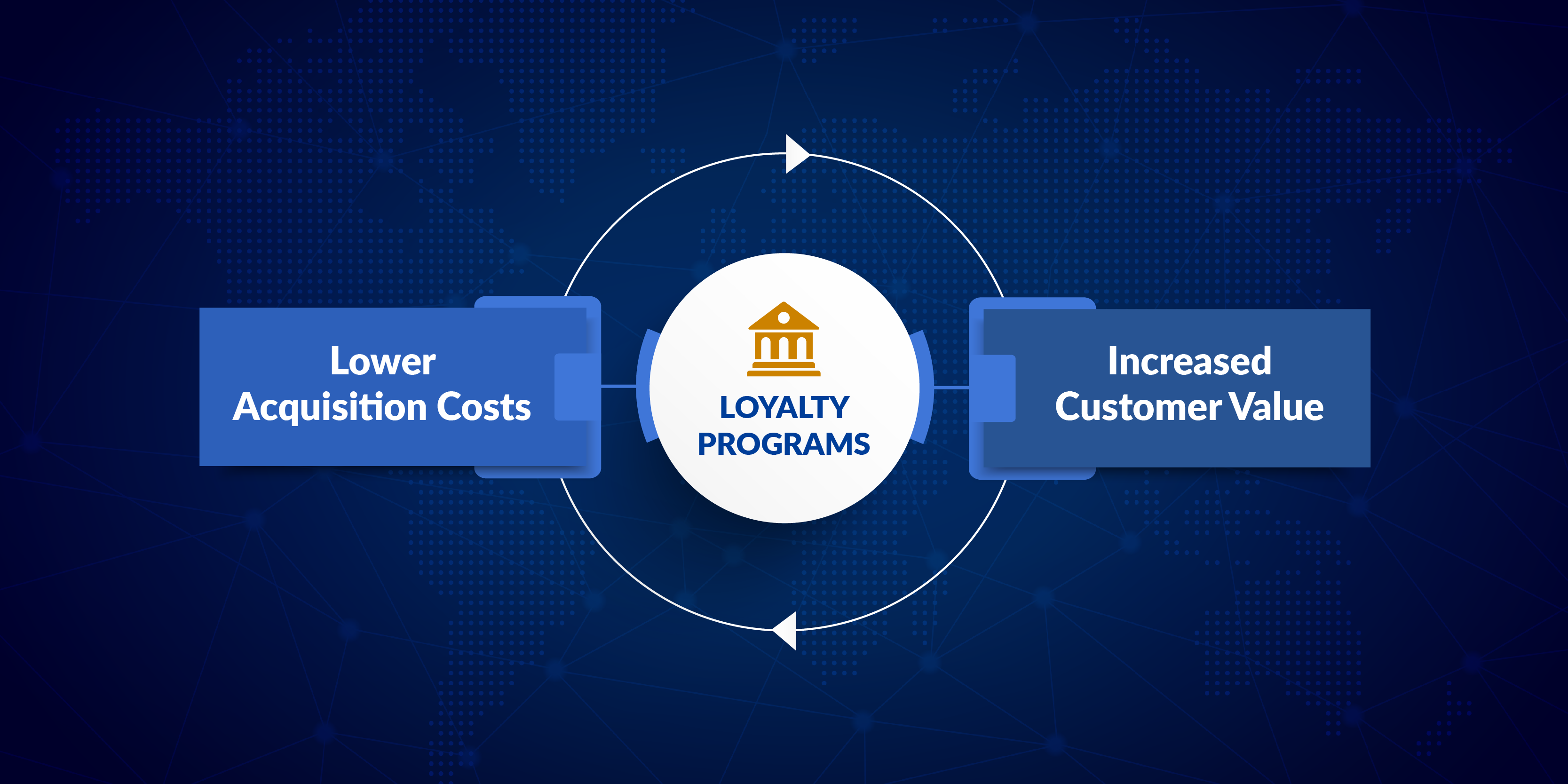
Customer acquisition in the BFSI sector is costly: McKinsey reports that banks spend up to 6–7 times more acquiring a new customer than retaining an existing one. Loyalty programmes, when strategically designed, not only improve retention but also reduce acquisition costs by creating engaged, repeat customers who advocate for the brand.
This article explores the mechanisms through which loyalty programmes cut CAC, highlights frameworks for maximising ROI, and demonstrates how platforms like Rekyndl streamline multi-channel loyalty initiatives to reduce acquisition costs effectively.
How do loyalty programmes reduce acquisition costs in BFSI?
Loyalty programmes increase customer lifetime value (CLV) and reduce churn, directly impacting acquisition costs. By rewarding behaviours like repeat transactions, referrals, or product adoption, banks encourage customers to deepen their relationship, reducing the need for costly acquisition campaigns.
Key mechanisms:
- Referral incentives: Encourage existing customers to bring in new accounts, lowering marketing spend per acquisition
- Retention-driven loyalty: Engaged customers are less likely to switch providers, reducing churn-related acquisition efforts
- Behavioural reinforcement: Gamification and tiered rewards encourage cross-sell and upsell, spreading marketing investment across higher CLV accounts
-
Framework: Acquisition Cost Reduction via Loyalty
- Identify high-value customer behaviours
- Implement reward structures that incentivise retention and referrals
- Track CLV improvements to quantify CAC reduction
What types of loyalty programmes are most effective in BFSI?
Bain research shows that multi-tiered points-based programmes outperform simple cashback schemes in retention and cross-product adoption.
Examples include:
- Points for engagement: Reward customers for using multiple products
- Tiered membership levels: Encourage ongoing transactions to maintain or upgrade status
- Experiential rewards: Travel, dining, or lifestyle incentives create emotional engagement
Comparison Table: Cashback vs Points-Based Loyalty Programmes
Points-based loyalty encourages holistic engagement, driving referrals and reducing reliance on paid acquisition channels.
How to measure the ROI of loyalty programmes for acquisition?
Tracking CAC reduction from loyalty programmes requires integrating customer behaviour, reward utilisation, and retention metrics. Key KPIs include:
- Customer retention rate: Direct impact on reduced acquisition spend
- Referral conversion: Quantifies cost savings from word-of-mouth acquisition
- Redemption rates and engagement: Ensures incentives align with desired behaviours
Decision Guide: ROI Measurement for Loyalty Programmes
- Calculate baseline CAC and CLV
- Track incremental CLV from loyalty programme participants
- Analyse reduction in marketing spend per net new customer
Platforms like Rekyndl automate tracking and reporting, providing analytics dashboards for marketing leaders to measure ROI effectively.
What implementation strategies maximise CAC reduction?
Successful BFSI loyalty programmes integrate digital channels, marketing automation, and data-driven insights:
- Omnichannel delivery: Rewards delivered via mobile apps, emails, and in-branch kiosks ensure broad participation
- Behavioural triggers: Automate incentives for cross-sell, referral, or transaction milestones
- Data analytics: Identify high-value customers and personalise rewards for maximum retention and advocacy
Framework: Loyalty Optimisation Loop
- Identify target behaviours and segments
- Deploy rewards through automated channels
- Analyse performance and adjust incentives iteratively
This structured approach ensures loyalty programmes reduce CAC while enhancing overall engagement and CLV.
Frequently Asked Questions
How do loyalty programmes lower CAC for banks and fintechs?
By increasing customer retention and referrals, loyalty programmes reduce the need for costly acquisition campaigns. Engaged customers act as advocates, decreasing paid marketing dependency.
What is the ROI calculation for loyalty programmes?
ROI is calculated by measuring incremental CLV, reduced churn, and referral-driven customer acquisition against the cost of rewards and programme management.
What types of rewards are most effective for CAC reduction?
Tiered points, experiential rewards, and cross-product incentives drive retention, cross-sell, and referrals more effectively than simple cashback schemes.
Can Rekyndl help track CAC impact?
Yes. Rekyndl provides BFSI-tailored loyalty solutions with automated tracking, analytics dashboards, and multi-partner reward management to quantify acquisition cost reductions. (Rekyndl BFSI solutions)
Conclusion
Loyalty programmes are a proven lever for reducing acquisition costs in BFSI by increasing retention, encouraging referrals, and driving deeper product engagement. By leveraging platforms like Rekyndl, marketing leaders can implement multi-channel, data-driven loyalty programmes that maximise ROI and reduce CAC. Banks and fintechs adopting this approach are positioned for sustainable growth with optimised marketing spend.
Explore how Rekyndl can help your BFSI organisation reduce acquisition costs with multi-partner loyalty programmes and analytics-driven rewards.
https://www.therewardstore.com/rekyndl/solutions/financial-services-fintech
Sign up for our newsletter for trending top content!


