
Loyalty platform vs CRM in banking: which solution drives better customer engagement?

Sign up for our newsletter for trending top content!
Introduction
Bain & Company reports that financial institutions with integrated loyalty platforms see up to 25% higher customer retention compared to those relying solely on CRMs.
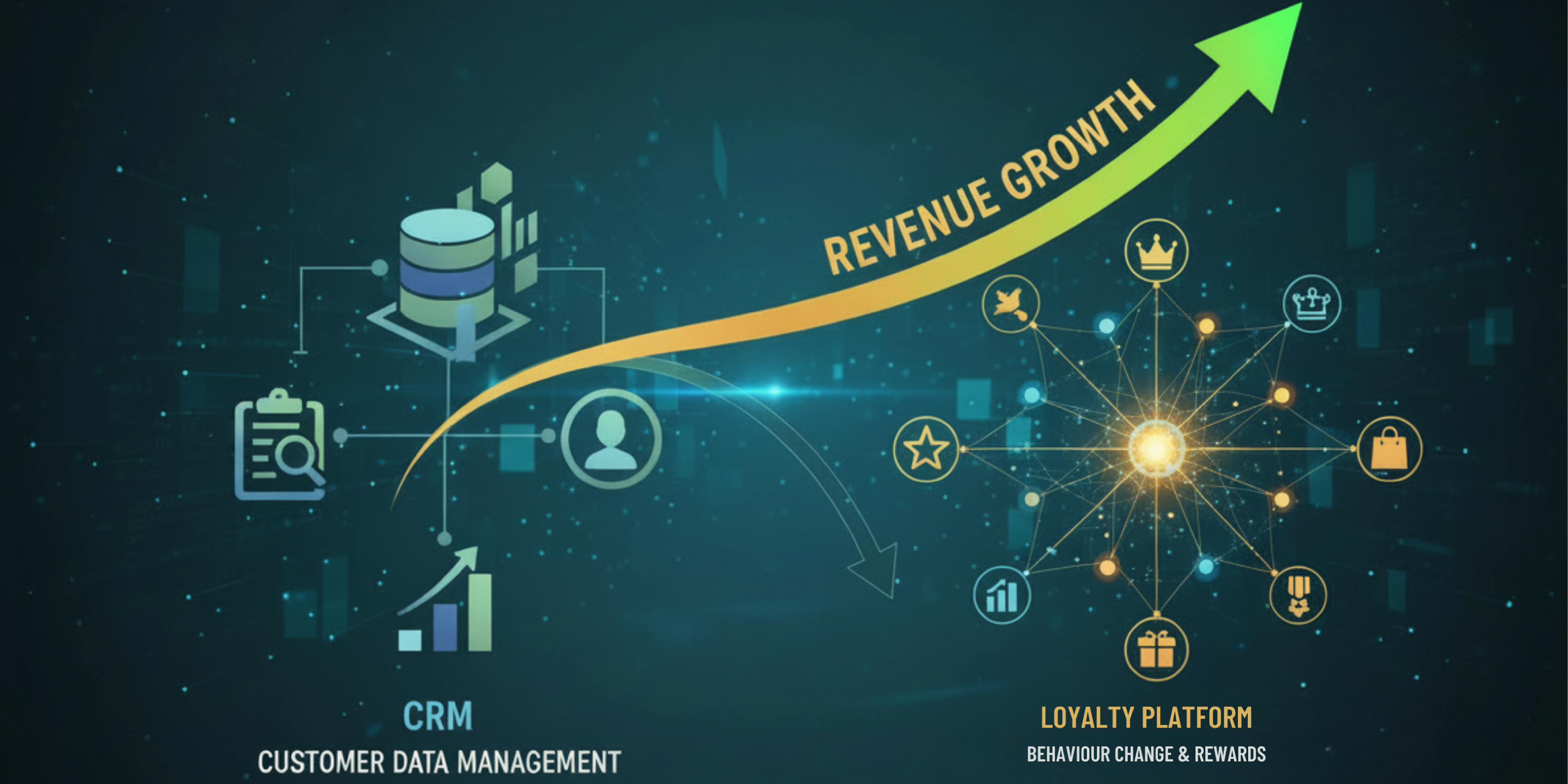
While CRMs manage customer data and transactions, they often lack the tools to run personalised, scalable loyalty programmes. For Marketing Leaders in banking and fintech, understanding the distinctions between CRMs and dedicated loyalty platforms is crucial for driving engagement, cross-selling, and long-term customer value.
This article explains the differences, evaluates capabilities, and highlights why banks may need a specialised loyalty solution alongside CRM systems.
Why can a CRM not fully manage loyalty programmes?
CRMs excel at tracking customer interactions, managing accounts, and supporting sales campaigns. However, Aberdeen Group reports that 80% of banks using only CRMs for loyalty struggle to track reward utilisation and engagement metrics effectively.
Limitations include:
- Inability to deliver personalised rewards at scale
- No built-in redemption catalogues for points, experiences, or gift options
- Minimal analytics on behavioural loyalty drivers
Decision guide: A CRM is best for customer segmentation and transaction history, while a loyalty platform offers reward management, engagement tracking, and real-time analytics.
How do loyalty platforms enhance customer engagement beyond a CRM?
Dedicated loyalty platforms allow banks to reward behaviours that drive retention, cross-sell, and advocacy. Forrester notes that organisations using loyalty platforms see a 20–30% lift in repeat transactions.
Key capabilities include:
- Tiered or points-based reward structures
- Experiential rewards such as travel, dining, or lifestyle benefits
- Automated redemption, notifications, and campaign workflows
- Behavioural analytics to optimise reward effectiveness
Comparison:
A loyalty platform complements a CRM by translating customer data into tangible incentives that drive engagement.
What KPIs should banks track to evaluate loyalty programme effectiveness?
Measuring the impact of loyalty initiatives requires tracking both financial and behavioural metrics:
Financial KPIs:
- Incremental revenue generated by loyalty campaigns
- Customer lifetime value growth
- ROI on reward spend
Behavioural KPIs:
- Reward redemption rate
- Repeat transaction frequency
- Referral and advocacy activity
Framework: The Loyalty ROI Dashboard
- Input: Budget allocation and campaign reach
- Output: Engagement, redemption, and retention
- Outcome: Incremental revenue and advocacy
Using a loyalty platform, banks can capture these metrics in real time, providing insights that a CRM alone cannot generate.
How can real-time tracking improve loyalty programme outcomes?
Real-time visibility into reward earning, redemption, and partner activity allows Marketing Leaders to optimise campaigns dynamically. NASSCOM reports that automation and real-time tracking reduce errors by up to 70% and improve partner and customer satisfaction.
Benefits include:
- Immediate adjustments to reward tiers or offers
- Early identification of disengaged customers
- Accurate measurement of ROI per channel or segment
- Faster, automated fulfilment of rewards
Platforms like Rekyndl provide BFSI-specific solutions for automated, real-time loyalty management, ensuring higher engagement and measurable business outcomes.
Frequently asked questions
What is the difference between a CRM and a loyalty platform in banking?
A CRM manages customer data, transactions, and account activity, whereas a loyalty platform enables reward management, behavioural analytics, and personalised engagement campaigns.
What does a bank need that a CRM cannot provide?
Banks require real-time reward tracking, flexible redemption options, tiered loyalty structures, and behavioural insights capabilities typically absent from standard CRMs.
How can Marketing Leaders track the ROI of loyalty initiatives?
KPIs include incremental revenue, customer lifetime value, redemption rates, repeat transaction frequency, and advocacy metrics. Loyalty platforms provide dashboards to monitor these metrics in real time.
Can Rekyndl help banks manage loyalty programmes?
Yes. Rekyndl offers a BFSI solution that automates loyalty campaigns, manages reward redemption, and provides advanced analytics to optimise customer engagement and ROI.
Conclusion
While CRMs are essential for managing customer data, they cannot fully execute or measure loyalty initiatives. Dedicated loyalty platforms complement CRMs by delivering personalised rewards, behavioural analytics, and real-time insights. Marketing Leaders in banking and fintech can use loyalty platforms like Rekyndl to drive retention, engagement, and incremental revenue effectively.
See how Rekyndl’s BFSI solution enables real-time loyalty management and measurable ROI for banks and fintech organisations.
Explore the solution today.
https://www.therewardstore.com/rekyndl/solutions/financial-services-fintech
Sign up for our newsletter for trending top content!


