
How Pharmaceutical Companies Can Incentivise Chemist Networks and Distributor Partners Compliantly

Sign up for our newsletter for trending top content!
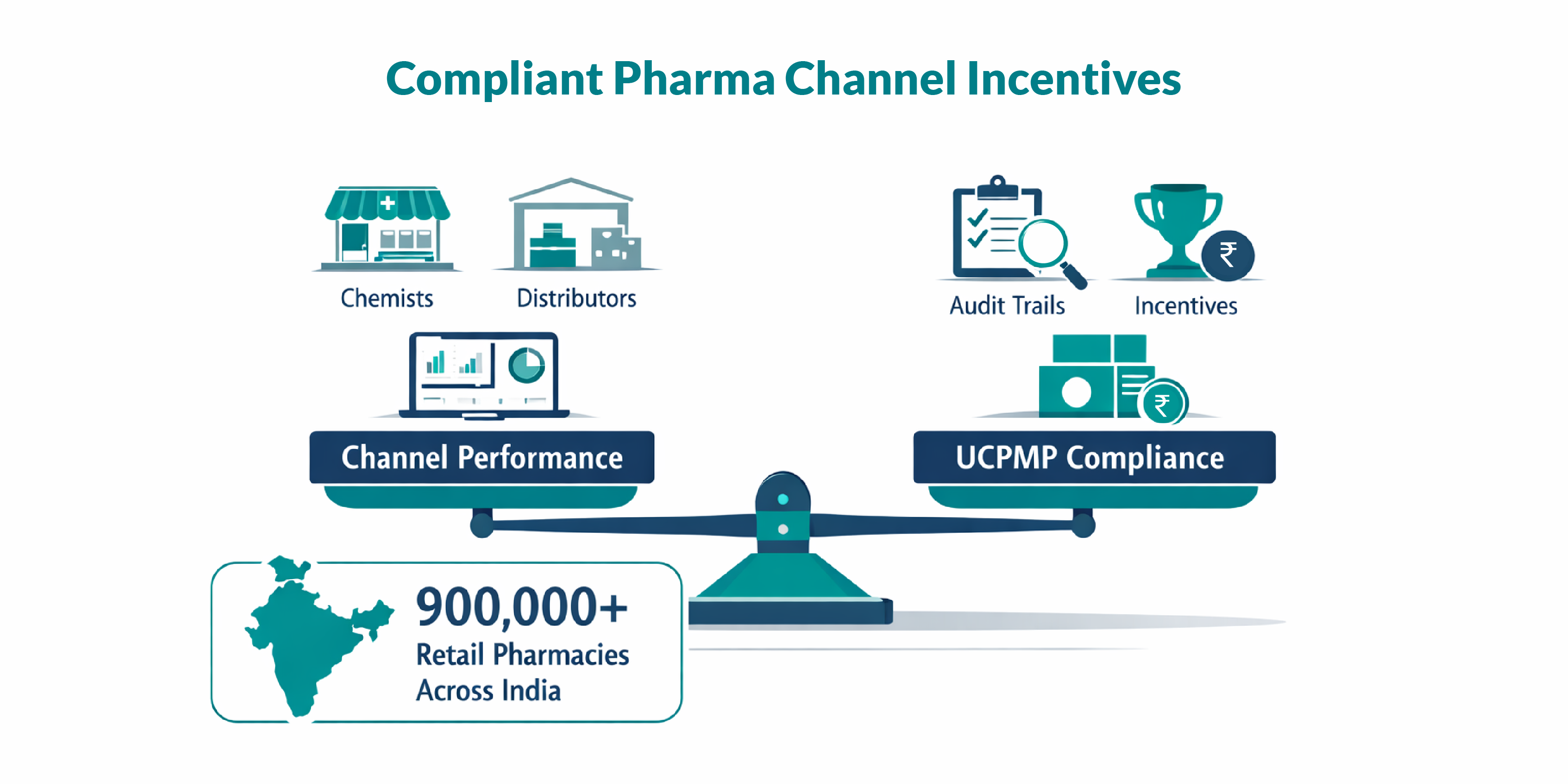
Pharmaceutical companies in India depend on an extensive network of distributors, stockists and chemists to reach patients. Yet channel engagement remains one of the industry's most complex commercial challenges. According to the Indian Pharmaceutical Alliance, India has more than 900,000 retail pharmacy outlets, making channel visibility and incentive governance increasingly difficult at scale.
At the same time, the Uniform Code for Pharmaceutical Marketing Practices (UCPMP) has intensified scrutiny around how pharmaceutical companies reward channel participants. Sales leaders now face a dual challenge. They must drive stocking, distribution expansion and sell-through performance while ensuring every incentive remains transparent, auditable and compliant.
This article explores how pharmaceutical companies can build effective distributor and chemist incentive programmes within regulatory boundaries. It examines common programme failures, compliant incentive structures, field force contest design, performance visibility and the role of automation in reducing risk while improving channel engagement.
The Compliance Tightrope: What UCPMP Says About Pharma Channel Incentives
The pharmaceutical sector operates under far greater scrutiny than most industries. While channel incentives remain a legitimate commercial tool, organisations must ensure that programme structures do not create conflicts of interest, encourage inappropriate selling behaviour or undermine ethical standards.
The Uniform Code for Pharmaceutical Marketing Practices (UCPMP) emphasises transparency, accountability and ethical promotion. Sales leaders therefore need incentive programmes that reward measurable business outcomes without creating ambiguity around intent or eligibility.
Research from Deloitte consistently shows that highly regulated industries achieve stronger compliance outcomes when organisations standardise processes, automate approvals and maintain comprehensive audit trails. Manual incentive management creates unnecessary exposure because teams often struggle to track eligibility rules, payout approvals and reward distribution consistently.
Key Compliance Principles for Pharma Incentives
- Define clear eligibility criteria.
- Document programme objectives and payout structures.
- Maintain auditable records for every reward issued.
- Ensure equal treatment across qualified channel participants.
- Separate performance incentives from activities that could create ethical concerns.
The goal is not to eliminate incentives. The goal is to create a transparent framework that supports commercial growth while satisfying governance requirements.
For pharmaceutical sales leaders, compliance is no longer a back-office responsibility. It has become a strategic component of channel performance management.
Why Chemist Network Engagement Programmes Fail Without Transparency
Many pharma channel programmes underperform despite generous budgets. The problem is rarely reward value. The problem is trust.
According to Gallup, employees and business stakeholders engage more actively when they clearly understand how performance links to recognition and rewards. The same principle applies to chemists, distributors and stockists.
When channel participants cannot see progress, understand qualification criteria or verify payouts, programme participation declines rapidly. Distributors often perceive incentive programmes as inconsistent or biased, even when organisations intend otherwise.
Common transparency gaps include:
- Delayed performance reporting.
- Unclear incentive calculations.
- Manual claim submission processes.
- Limited visibility into earned rewards.
- Disputed payout amounts.
Research from McKinsey indicates that organisations with data transparency across commercial operations often outperform peers because stakeholders make faster decisions and remain more engaged with strategic priorities.
For pharmaceutical companies, transparency serves another purpose. It creates evidence.
A distributor who can track targets, achievements and payouts through a digital portal is far less likely to challenge programme outcomes. Similarly, leadership teams gain documented proof that rewards align with pre-defined business objectives.
Transparent engagement programmes create confidence. Confidence drives participation. Participation drives performance.
Without transparency, even well-funded incentive initiatives struggle to deliver sustainable channel loyalty.
Designing Stocking and Sell-Through Incentives That Work Within Regulatory Limits
The most effective pharmaceutical channel incentives focus on measurable commercial outcomes rather than subjective activities.
Sales leaders typically concentrate on two objectives:
- Stocking expansion.
- Sell-through acceleration.
However, programme design determines whether incentives support compliance or create risk.
A Practical Incentive Design Framework
Research from the Incentive Research Foundation (IRF) shows that incentive programmes linked to clearly measurable business outcomes consistently outperform programmes based on subjective assessments.
Pharmaceutical companies should prioritise:
- Tier-based achievement structures.
- Volume growth thresholds.
- Geographic expansion goals.
- Product availability targets.
- Digital proof of performance.
The emphasis should remain on business results rather than discretionary rewards.
Platforms such as Paytives help organisations automate qualification rules, track performance against targets and maintain documented payout histories. This reduces administrative complexity while strengthening governance.
The result is a channel incentive framework that supports commercial growth without compromising compliance standards.
How to Run MR Field Force Sales Contests Without Creating Mis-selling Risk
Medical representatives play a critical role in product awareness, distributor engagement and territory development. However, poorly designed sales contests can unintentionally encourage undesirable behaviours.
Research from Gartner highlights that incentive systems influence behaviour far beyond the intended performance metric. Organisations therefore need balanced scorecards rather than single-metric competitions.
Build Multi-Factor Performance Models
Instead of rewarding only sales volume, pharmaceutical companies should incorporate:
- Territory growth.
- Outlet coverage.
- Product availability.
- Training completion.
- Compliance adherence.
- Reporting accuracy.
This approach reduces pressure on representatives to pursue short-term volume at the expense of sustainable performance.
Create Behavioural Guardrails
According to Mercer, organisations that combine performance metrics with behavioural expectations achieve stronger long-term commercial outcomes than those focused solely on revenue generation.
Examples include:
- Mandatory compliance completion.
- Territory coverage benchmarks.
- CRM update requirements.
- Distributor satisfaction measures.
Sales contests should reinforce organisational values as well as commercial goals.
By rewarding balanced performance, pharmaceutical companies reduce the likelihood of mis-selling concerns while maintaining healthy competition across field teams.
The objective is not simply to increase sales activity. It is to increase the right sales activity.
Real-Time Performance Dashboards: Why Distributors Switch Principals for Visibility Alone
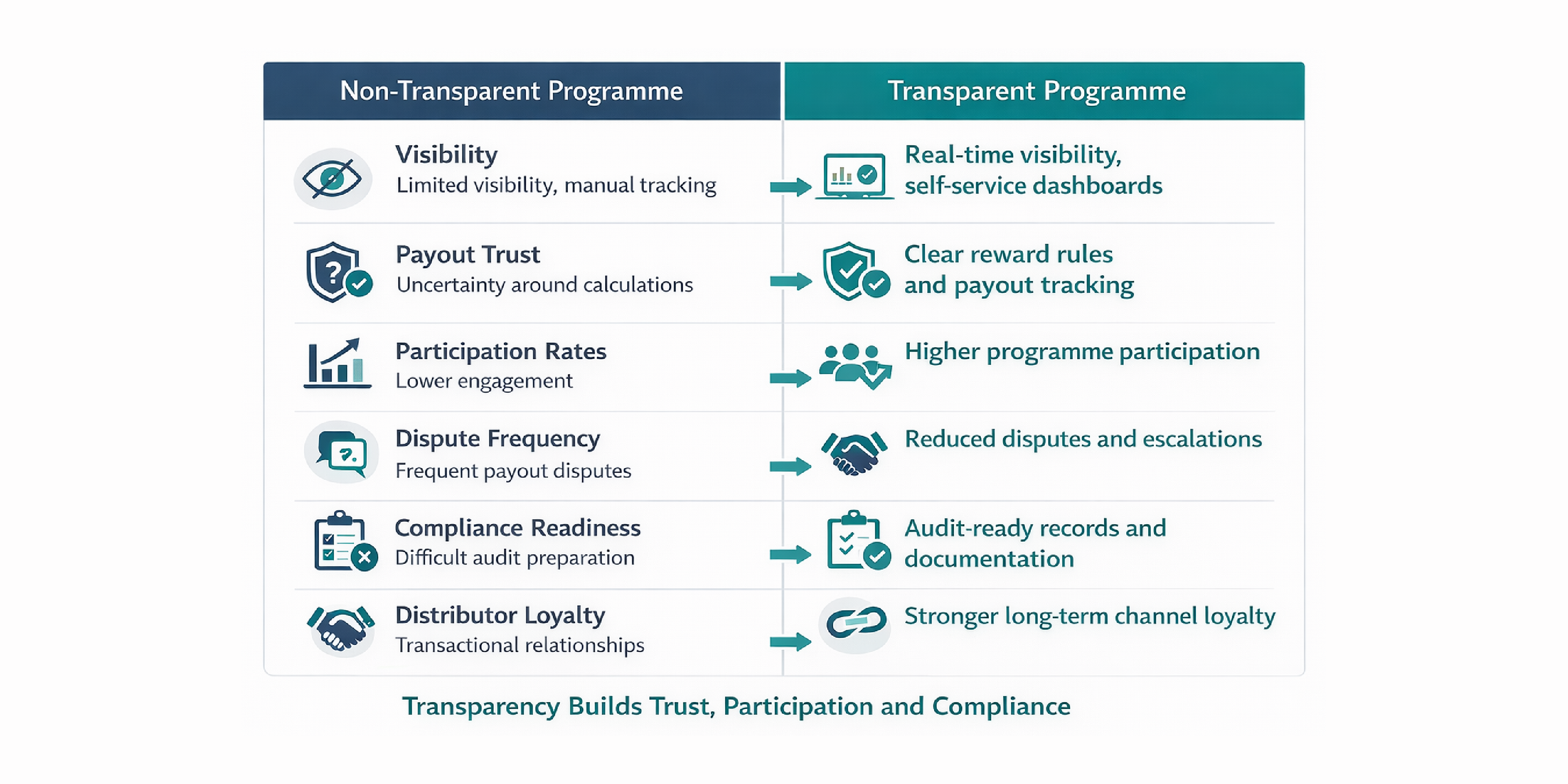
Many pharmaceutical companies assume distributors change partnerships primarily because of margins. In reality, visibility often plays a much larger role.
According to Forrester, business partners increasingly expect consumer-grade digital experiences, including real-time performance tracking and self-service access to information.
Distributors frequently manage relationships with multiple principals. When one organisation provides instant access to targets, earnings, performance rankings and incentive progress while another relies on spreadsheets and email updates, the digital experience becomes a competitive differentiator.
What Distributors Want to See
- Current targets.
- Achievement status.
- Pending incentives.
- Historical payouts.
- Ranking against peers.
- Programme announcements.
Research from Aberdeen Group shows that organisations with stronger performance visibility achieve higher partner engagement and programme participation rates than those using manual reporting processes.
This is where modern channel incentive platforms become particularly valuable.
Paytives provides real-time dashboards, automated incentive calculations, multi-tier channel management and global payout capabilities. Sales leaders gain a single source of truth, while distributors receive immediate visibility into programme performance.
When visibility improves, trust increases. When trust increases, channel loyalty becomes easier to sustain.
What a Fully Compliant, Automated Pharma Channel Incentive Programme Looks Like
A compliant incentive programme requires more than policy documents. It requires operational discipline.
According to Deloitte, automation reduces compliance risk by minimising manual intervention and improving consistency across workflows. For pharmaceutical organisations managing hundreds or thousands of channel participants, automation becomes essential.
Core Components of a Modern Programme
Programme Design
- Standardised eligibility rules.
- Documented incentive structures.
- Role-based approval workflows.
Performance Tracking
- Automated data collection.
- Real-time achievement monitoring.
- Territory-level visibility.
Governance Controls
- Audit trails.
- Approval records.
- Compliance documentation.
Reward Distribution
- Automated calculations.
- Multi-currency payouts.
- Digital reward fulfilment.
Analytics
- ROI reporting.
- Participation analysis.
- Performance forecasting.
Sales leaders should evaluate channel incentive programmes against these capabilities rather than focusing solely on reward budgets.
For organisations seeking to modernise channel engagement, solutions such as Paytives combine incentive automation, distributor visibility, partner performance tracking and payout management within a single platform.
The future of pharmaceutical channel management will increasingly depend on transparency, automation and measurable accountability. Companies that invest in these capabilities now will be better positioned to scale compliantly.
Frequently Asked Questions
What is a pharma distributor incentive programme?
A pharma distributor incentive programme rewards channel partners for achieving predefined commercial objectives such as stocking targets, distribution expansion or sell-through growth. The programme should include transparent qualification criteria, documented rules and auditable payout processes. Effective programmes align channel behaviour with business goals while maintaining compliance.
How can pharmaceutical companies incentivise chemists compliantly?
Companies should reward measurable business outcomes rather than subjective activities. They should document eligibility criteria, maintain audit trails and ensure participants understand programme rules. Transparent reporting and automated tracking strengthen compliance while improving engagement.
Why do distributor incentive programmes fail?
Most programmes fail because participants lack visibility into performance metrics, incentive calculations or payout status. Gallup research consistently demonstrates the importance of transparency in driving engagement. When distributors trust programme data, participation typically increases.
How do real-time dashboards improve distributor engagement?
Real-time dashboards provide immediate access to targets, achievements, rankings and earnings. According to Forrester, business partners increasingly expect digital self-service experiences. Visibility improves trust, reduces disputes and encourages ongoing participation.
Can Paytives support pharmaceutical channel incentive programmes?
Yes. Paytives helps pharmaceutical companies automate incentive programme management, monitor distributor performance, calculate payouts, manage multi-tier partner structures and maintain audit-ready records. This helps sales leaders improve channel engagement while supporting compliance objectives.
Conclusion
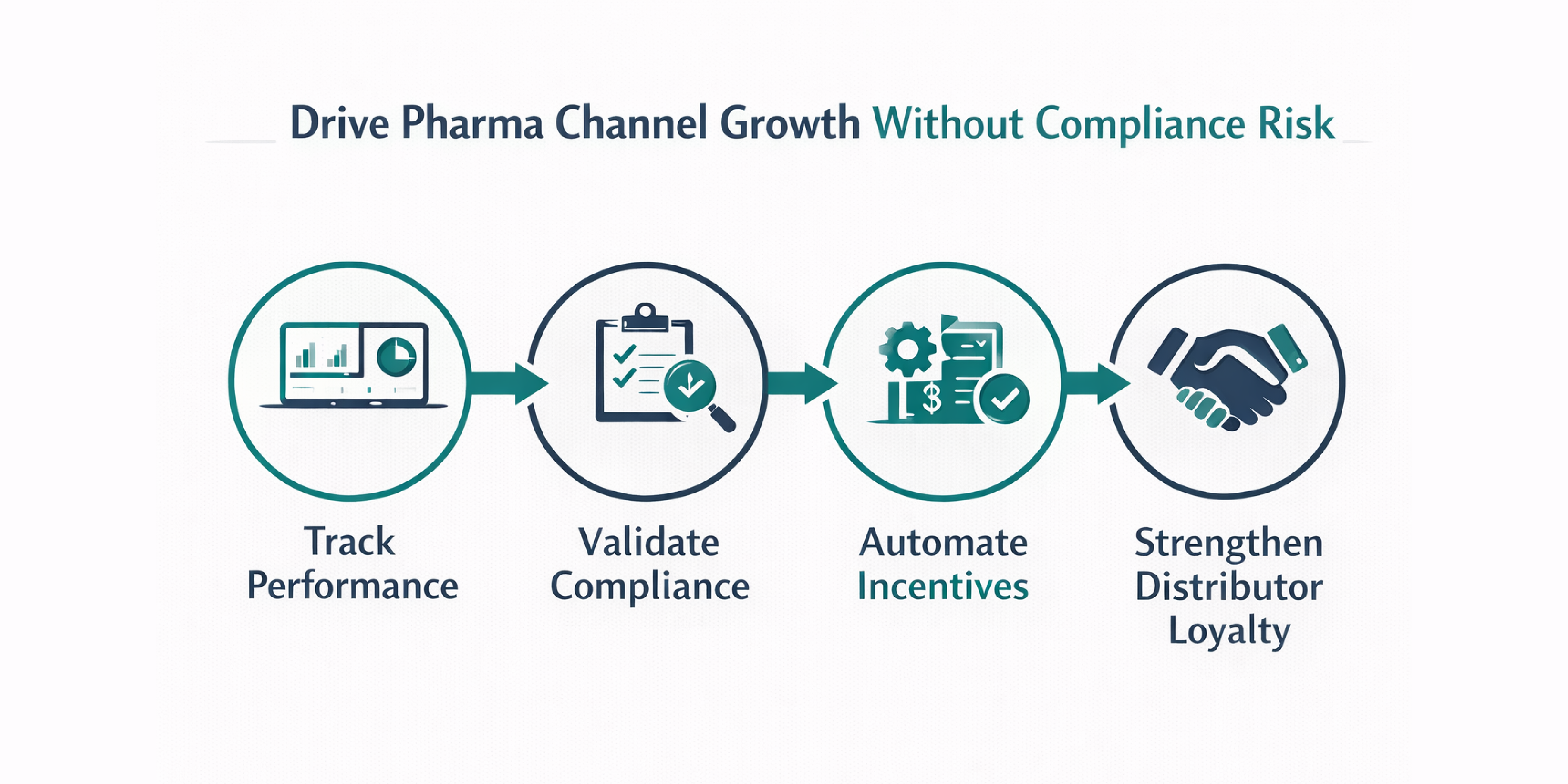
Pharmaceutical companies no longer need to choose between compliance and channel performance. The most successful organisations build transparent, measurable and automated incentive programmes that reward the right behaviours while maintaining full governance control.
As regulatory expectations continue to evolve, real-time visibility, documented accountability and automated incentive management will become standard requirements rather than competitive advantages.
See how Paytives helps pharma companies incentivise channel partners compliantly and improve distributor engagement at scale: https://www.therewardstore.com/paytives/solutions/healthcare
Sign up for our newsletter for trending top content!


