
The Role of Milestone Rewards in Employee and Customer Engagement

Sign up for our newsletter for trending top content!
Introduction
According to Gallup, employees who receive meaningful recognition are more engaged, productive, and connected to their organisation’s goals. Yet many organisations still treat recognition as an occasional activity rather than a continuous engagement strategy. Milestone rewards provide a structured approach by celebrating important moments in an employee or customer journey, from service anniversaries and achievements to onboarding completion and loyalty milestones.
For HR Leaders, milestone rewards create measurable opportunities to strengthen culture, improve retention, and reinforce desired behaviours. They help organisations move beyond one-time appreciation initiatives by creating consistent moments of recognition. This article explains how milestone rewards influence employee and customer engagement, which milestones matter most, how organisations can design effective reward strategies, and how technology enables scalable milestone recognition.
Why Do Milestone Rewards Strengthen Employee and Customer Engagement?
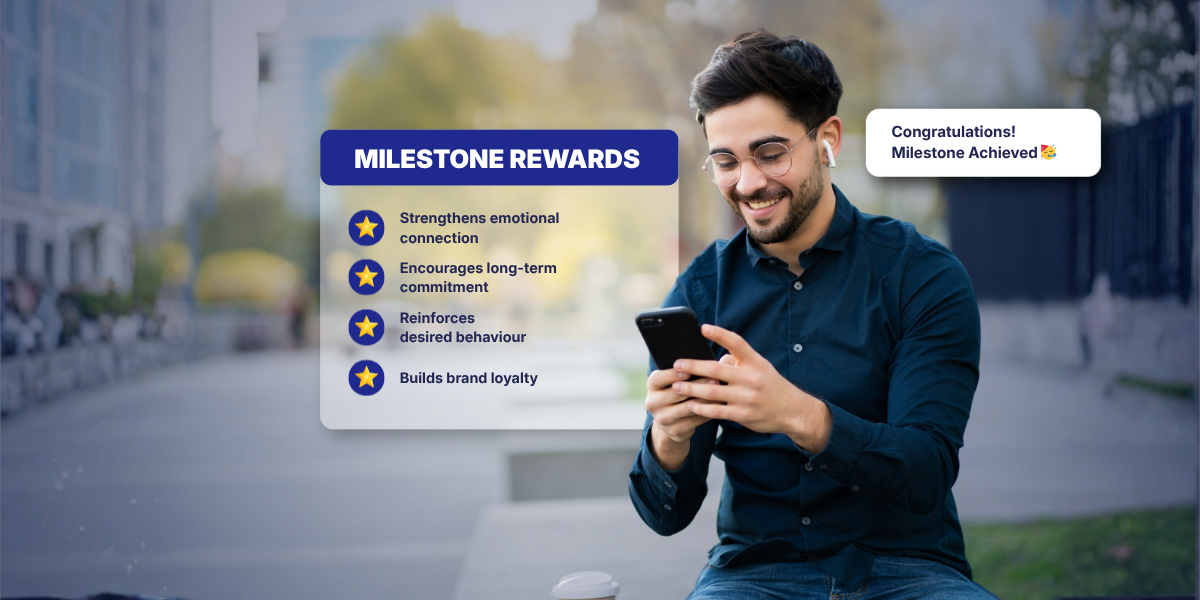
Milestone rewards create meaningful connection by recognising progress at important points in a relationship. Whether an organisation is engaging employees or customers, these moments provide opportunities to reinforce commitment and encourage continued participation.
According to O.C. Tanner, frequent and meaningful recognition contributes to stronger workplace cultures because employees feel valued and connected to organisational purpose. Similarly, Bain & Company highlights that loyalty grows when organisations consistently deliver experiences that demonstrate customer appreciation.
Milestones create value because they transform routine moments into memorable experiences.
Unlike generic rewards, milestone recognition connects the reward with a specific achievement. This creates stronger emotional value because the recipient understands why they are being recognised.
According to Deloitte, organisations that prioritise employee experience create stronger engagement outcomes. Milestone rewards support this approach by making recognition predictable, personalised, and aligned with organisational values.
For HR Leaders, the objective is not simply to provide rewards. The objective is to create recognition moments that strengthen relationships over time.
How Do Employee Milestone Rewards Help Reduce Attrition?
Employee retention depends heavily on whether individuals feel valued, recognised, and connected to their workplace. Milestone rewards support retention by acknowledging employee contributions at meaningful stages of their career journey.
According to Gallup, employees who feel appreciated are more likely to remain engaged and committed to their organisation. Recognition becomes especially important during key moments such as work anniversaries, promotions, project completions, and professional achievements.
A structured employee milestone framework may include:
Milestone rewards also help managers create regular engagement opportunities. Without structured systems, recognition often depends on individual manager habits, which can lead to inconsistency.
According to SHRM, organisations improve employee experience when they create consistent processes that support workforce engagement.
ApplaudIQ helps organisations manage milestone recognition through structured workflows, making it easier for HR teams to celebrate employee achievements consistently across departments and locations.
By integrating milestone recognition into everyday culture, organisations can create stronger employee relationships and support long-term retention strategies.
What Types of Milestones Should Trigger Rewards?
The most effective milestone rewards programmes identify moments that have personal and organisational significance. HR Leaders should focus on milestones that reinforce company values, employee growth, and meaningful contributions.
According to Mercer, organisations improve workforce engagement when recognition programmes align with employee expectations and business objectives.
Common employee milestones include:
Customer-focused organisations can also apply milestone rewards to strengthen loyalty journeys.
Examples include:
According to Forrester, organisations create better customer experiences when they understand and respond to customer needs throughout the journey.
The key is relevance. A milestone reward should feel connected to the achievement rather than appearing as a generic incentive. This is why organisations increasingly use flexible reward categories, including experiences, merchandise, travel options, dining options, and gift cards from broad reward networks.
How to Determine the Optimal Milestone Reward Value
Determining the right reward value is critical to ensure recognition feels meaningful without overspending. According to Aberdeen Group, employees are 2.5× more likely to value recognition that reflects their contribution proportionally rather than receiving uniform or arbitrary rewards. The optimal reward value depends on the type of milestone, the recipient’s role, and the desired behavioural outcome.
A decision framework for reward value:
McKinsey notes that strategic reward calibration improves engagement ROI by aligning incentives with organisational objectives. HR Leaders should combine internal benchmarking, budget guidelines, and feedback from employees to determine values that are perceived as fair, motivating, and impactful.
How ApplaudIQ and Rekyndl Support Milestone Journeys
Technology enables scalable and consistent milestone recognition. ApplaudIQ automates employee milestone tracking, ensuring timely alerts for managers, structured workflows, and integrated reporting across departments and locations. Rekyndl extends this capability to customers by automating loyalty milestones, onboarding rewards, and engagement triggers with marketing automation and journey builder features.
Key platform capabilities:
According to Forrester, integrating technology into recognition programmes reduces administration time by up to 40% while improving engagement visibility. Platforms also allow organisations to test and optimise reward strategies based on data-driven insights.
Milestone Reward Design Framework
A structured framework ensures that rewards are meaningful, scalable, and aligned with strategic goals:
- Identify Critical Milestones – Map employee and customer journeys to find key engagement points.
- Define Reward Objectives – Clarify whether the reward aims to improve retention, drive performance, or encourage loyalty.
- Select Reward Categories – Use flexible options: gift cards, experiential rewards, merchandise, or travel vouchers.
- Determine Reward Value – Align value with milestone significance, internal benchmarks, and budget.
- Automate and Monitor – Leverage ApplaudIQ or Rekyndl to automate delivery and track engagement.
- Evaluate and Optimise – Review redemption patterns, feedback, and impact on retention to adjust future rewards.
Aberdeen Group highlights that structured frameworks enhance programme consistency, making milestone recognition predictable and meaningful.
Frequently Asked Questions
What types of milestones should trigger rewards?
Focus on milestones that are significant to both the organisation and the recipient. Examples include service anniversaries, performance achievements, onboarding completions, and loyalty milestones for customers. These create meaningful, memorable recognition moments.
How do milestone rewards reduce attrition?
Milestone rewards strengthen engagement and reinforce a sense of belonging. Employees who feel consistently valued are more likely to stay with the organisation. Recognising achievements during critical periods—like onboarding or promotions reduces early attrition risks.
What is the optimal milestone reward value?
Reward values should be proportional to the significance of the milestone, the recipient’s role, and organisational budgets. Combining internal benchmarking, feedback, and budget guidelines ensures rewards are motivating without overspending.
How do ApplaudIQ and Rekyndl support milestone programmes?
ApplaudIQ automates employee milestone tracking and recognition workflows, while Rekyndl manages customer loyalty milestones with marketing automation. Both platforms ensure timely, personalised, and scalable reward delivery, reducing manual effort and increasing engagement.
Conclusion
Milestone rewards are powerful levers to enhance engagement, loyalty, and retention across employees and customers. By focusing on meaningful moments, calibrating reward value, and leveraging technology platforms like ApplaudIQ and Rekyndl, organisations can create consistent, scalable, and impactful recognition programmes. Forward-looking companies will continue to integrate milestone recognition into core engagement strategies, ensuring measurable and long-term impact.
Explore how ApplaudIQ and Rekyndl can automate and scale milestone recognition:
Sign up for our newsletter for trending top content!


