
How Neobanks and Fintech Apps Can Use Loyalty Programmes to Improve DAU, Reduce Churn, and Grow Transaction Volume

Sign up for our newsletter for trending top content!
More than a quarter of Gen Z banking customers and over a fifth of Millennials say they are likely to switch banks within two years, a rate two to five times higher than that of older generations, according to Deloitte's 2025 Consumer Banking Survey. For a neobank, this is not a marginal churn problem.
It is a structural one, because the switching cost that once protected incumbent banks barely exists in a mobile-first product.
This article guides, what marketing leaders in neobanks and fintech apps should build once cashback stops working as a retention lever, covering the mechanics, the behaviours worth rewarding, and how to measure the return.
Why Neobank Churn Is Higher Than Traditional Banking, and Why Cashback Alone Cannot Fix It
Neobanks compete on convenience, not on the switching friction that has historically protected incumbent banks. Deloitte's 2025 Consumer Banking Survey found that 26.6 per cent of Gen Z and 22.5 per cent of Millennial respondents said they were likely to switch providers within two years, a rate two to five times higher than Gen X or Baby Boomer respondents.
McKinsey's Global Banking Annual Review 2026 notes that mature fintechs, including neobanks, have moved from being an irritant to incumbents to claiming a material share of industry revenue, which has intensified competition for the same digitally native customer base.
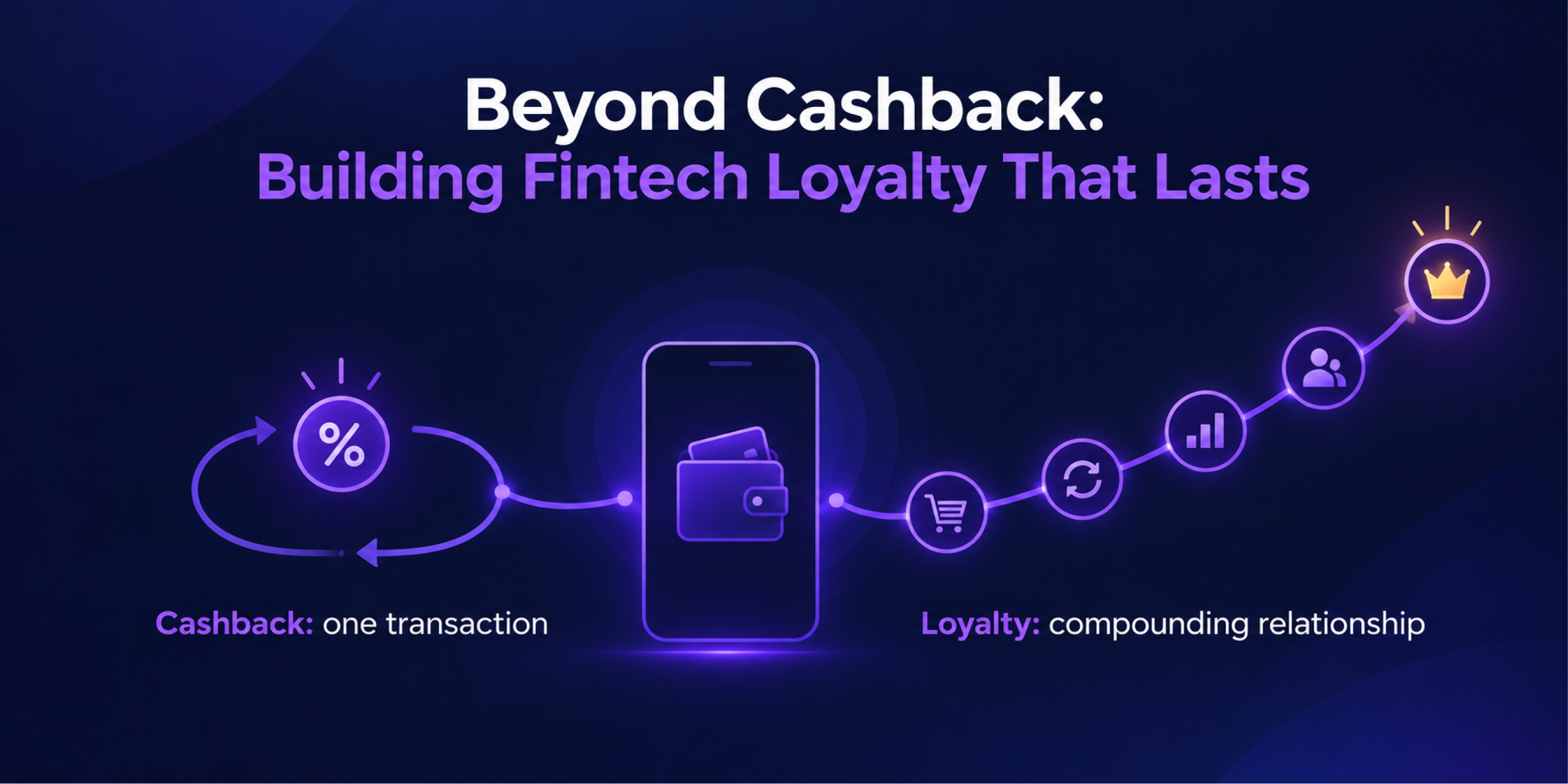
Cashback is easy to copy and easy to compare. A user who joined for a signup bonus or a cashback rate will leave the moment a competitor offers a marginally better one, because cashback rewards the transaction rather than the relationship. It does nothing to build switching cost, familiarity, or habit. A loyalty programme addresses a different problem.
It rewards the accumulation of behaviour over time, so that leaving means forfeiting progress, not just a discount. For a neobank, this distinction is the difference between a promotional cost line and a retention asset.
Rekyndl's approach to fintech loyalty design starts from this premise, treating reward mechanics as a structural retention lever rather than a periodic incentive campaign layered on top of the core product.
In-App Loyalty Mechanics That Drive Daily Active Usage Without Adding User Interface Complexity
The mechanics that move daily active usage are rarely the ones that require the most screen real estate. Research on gamified loyalty consistently finds that lightweight, familiar mechanics outperform elaborate ones. Gallup's engagement research found a 23 per cent premium in share of wallet and profitability among fully engaged customers compared with average customers, a gap that is driven by frequency of interaction rather than programme complexity.
Streak-based mechanics, small daily check-ins, and progress bars towards a milestone reward work because they create a visible, low-effort reason to open the app. Spin-based reward moments and QR-triggered challenges, covered in more depth in TRS's decision guide to loyalty gamification mechanics, give users a reason to return that is separate from the transactional reason for using a banking app in the first place.
The design discipline that matters most is restraint. Every mechanic added to a fintech interface carries a compliance and usability cost that a retail app does not face. The mechanics that succeed sit quietly inside an existing screen, a balance view, a payments confirmation, a notification, rather than requiring a new destination within the app.
Behaviour-Triggered Rewards for Fintech: Which User Actions Should Earn Points and Why

Not every action deserves a reward, and rewarding the wrong ones trains users towards behaviour that does not help the business. Forrester's research on loyalty programme design found that programmes perform better when customers understand exactly how their actions build towards future value, which means the earning logic has to be legible, not just generous.
For a fintech app, the actions worth rewarding fall into three categories.
First, activation behaviours: completing KYC, linking a primary account, or setting up a recurring payment, each of which meaningfully increases the likelihood a user treats the app as primary rather than secondary.
Second, frequency behaviours: routine bill payments, recurring transfers, and repeat merchant transactions, which build the daily habit that correlates with retention.
Third, expansion behaviours: adopting a second product such as a savings pot, an investment feature, or a credit line, which increases the cost of switching away.
Rewarding low-value, high-frequency actions such as simply opening the app achieves engagement metrics that do not translate into commercial value. The stronger design principle is to reward the actions that predict a user becoming a primary banking customer, and to make that logic visible to the user so the programme reads as fair rather than arbitrary.
How to Design a Loyalty Programme That Converts Occasional Users Into Primary Banking Customers
Most neobank users hold the app as a secondary account, used for a specific function such as splitting bills or holding a travel budget, while a traditional bank remains their primary relationship. Converting an occasional user into a primary one is a loyalty design problem, not a product feature problem, because it requires shifting habitual behaviour rather than adding a capability.
The comparison below sets out how a tiered loyalty structure typically differs by user stage.
A tiered structure gives marketing leaders a way to design distinct interventions for each stage rather than a single blanket reward rate. Bain and Company's long-standing research on retention economics finds that deepening an existing customer relationship delivers materially higher long-term profitability than continually acquiring new users, which is the commercial argument for investing in this conversion path rather than treating acquisition and retention as separate budgets.
Platforms such as Rekyndl support this staged approach by combining segmentation, automated journeys, and tiering rules within a single loyalty engine, so that the mechanic a user sees changes as their behaviour changes.
UPI and Wallet Loyalty: How to Reward Transaction Frequency Without Creating Point Breakage Liability
In the Indian market, UPI is the primary rail through which fintech transaction frequency happens, and the volumes involved change how a loyalty programme needs to be costed. NPCI data for May 2026 recorded 23.2 billion UPI transactions in a single month, an average of more than 737 million transactions a day. A loyalty programme built on transaction-triggered rewards at this scale can generate a very large volume of issued points quickly, which has direct accounting consequences.
Under IFRS 15 and ASC 606, issued loyalty points create a deferred revenue liability on the balance sheet at the point they are issued, not at the point they are redeemed. The size of that liability depends heavily on the breakage estimate, the proportion of points expected to go unredeemed. An inaccurate breakage estimate in either direction creates financial reporting risk, understating the liability if breakage is assumed too high, or overstating it if assumed too low.
For a high-frequency payment rail such as UPI, this means reward design and finance need to sit in the same conversation from the outset. Capped earning rates, expiry windows, and redemption-triggered rather than issuance-triggered accrual all reduce the liability exposure without reducing the perceived value to the user. This is a design constraint specific to transaction-frequency rewards in payments, and it is one that a generic loyalty template built for retail will not account for.
Measuring Fintech Loyalty ROI: DAU Lift, Churn Reduction, and Transaction Volume Per Active User
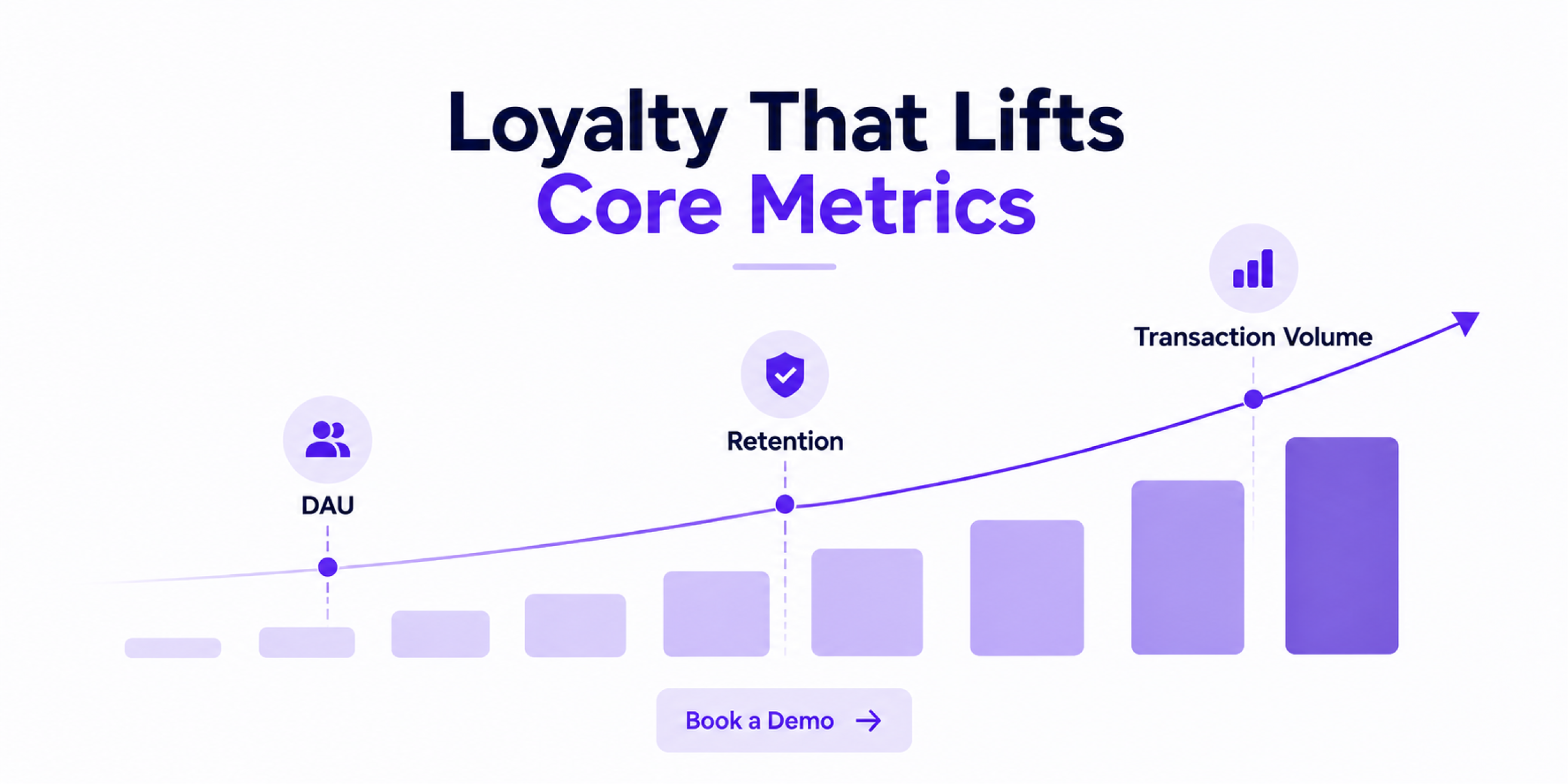
A fintech loyalty programme should be measured against the same three outcomes named in the brief for this piece, and each requires a distinct baseline. Daily active usage should be tracked as a cohort comparison between users enrolled in loyalty mechanics and a control group of otherwise similar users, not as an aggregate before-and-after figure, because aggregate figures conflate loyalty effects with seasonal or marketing-driven usage spikes.
Churn reduction is best measured against the switching intent baseline established by research such as Deloitte's Consumer Banking Survey, tracked at the cohort level over rolling two-year windows that match how switching intent itself is typically surveyed. McKinsey's Global Banking Annual Review 2026 frames the competitive threat from neobanks and fintechs in terms of revenue share captured from incumbents, which is a useful external benchmark for what a marketing leader is defending against internally.
Transaction volume per active user is the metric most directly tied to commercial value, since it connects loyalty participation to the interchange and float economics that underpin fintech revenue. This is best tracked as a ratio, transaction volume per active user in a loyalty cohort against the same figure in a non-loyalty cohort, reported monthly alongside DAU and churn so that the three metrics are read together rather than in isolation. A programme that lifts DAU without lifting transaction volume per user is building engagement without building commercial return, and that gap should be visible in reporting from the first month, not discovered at renewal.
Frequently Asked Questions
What is the difference between a cashback programme and a loyalty programme for a fintech app?
Cashback rewards a single transaction and is easy for a competitor to match or beat, which limits its retention value. A loyalty programme rewards accumulated behaviour over time, so that a user who leaves forfeits progress, not just a one-off discount. This structural difference is why loyalty programmes tend to outperform cashback on long-term retention, even when the underlying reward budget is similar.
How do neobanks reduce churn without discounting further?
Neobanks reduce churn by making the app harder to leave through habit and accumulated value rather than by lowering price further. Behaviour-triggered rewards for activation and expansion actions, tiered status, and journeys that respond to a user's actual usage pattern all build switching cost without requiring an additional discount. Platforms such as Rekyndl are built to automate this kind of behaviour-triggered journey at scale.
Can loyalty points create an accounting liability for a fintech app?
Yes. Under IFRS 15 and ASC 606, issued loyalty points are recognised as a deferred revenue liability at the point of issuance, and the size of that liability depends on the breakage estimate. High-frequency payment rails such as UPI can generate large point volumes quickly, so reward design decisions such as capped earning rates and expiry windows have direct financial reporting consequences.
When should a fintech app introduce a tiered loyalty structure rather than a flat reward rate?
A tiered structure becomes worthwhile once a marketing leader can distinguish occasional users from active and primary users in their data, because a flat reward rate treats all three the same and wastes budget on users who were never going to churn as well as users who were never going to convert. Tiering allows distinct mechanics for each stage, which is where the conversion from occasional to primary user actually happens.
Conclusion
Cashback buys a transaction. A well-designed loyalty programme buys the relationship, which is what actually protects a neobank against the switching intent Deloitte and McKinsey have both quantified.
The mechanics that work are behaviour-triggered, staged by user maturity, and costed correctly against breakage liability from day one. As UPI and other high-frequency rails continue to scale, the fintech apps that treat loyalty as financial infrastructure rather than a marketing add-on will be the ones that convert transaction frequency into retained, primary customers.
See how Rekyndl builds loyalty programmes for neobanks and fintech apps:https://www.therewardstore.com/rekyndl/solutions/financial-services-fintech.
Book a Demo: therewardstore.com/contact.
Sign up for our newsletter for trending top content!


