
How to Design Loyalty Programme Tiers That Customers Actually Want to Climb And That You Can Afford

Sign up for our newsletter for trending top content!
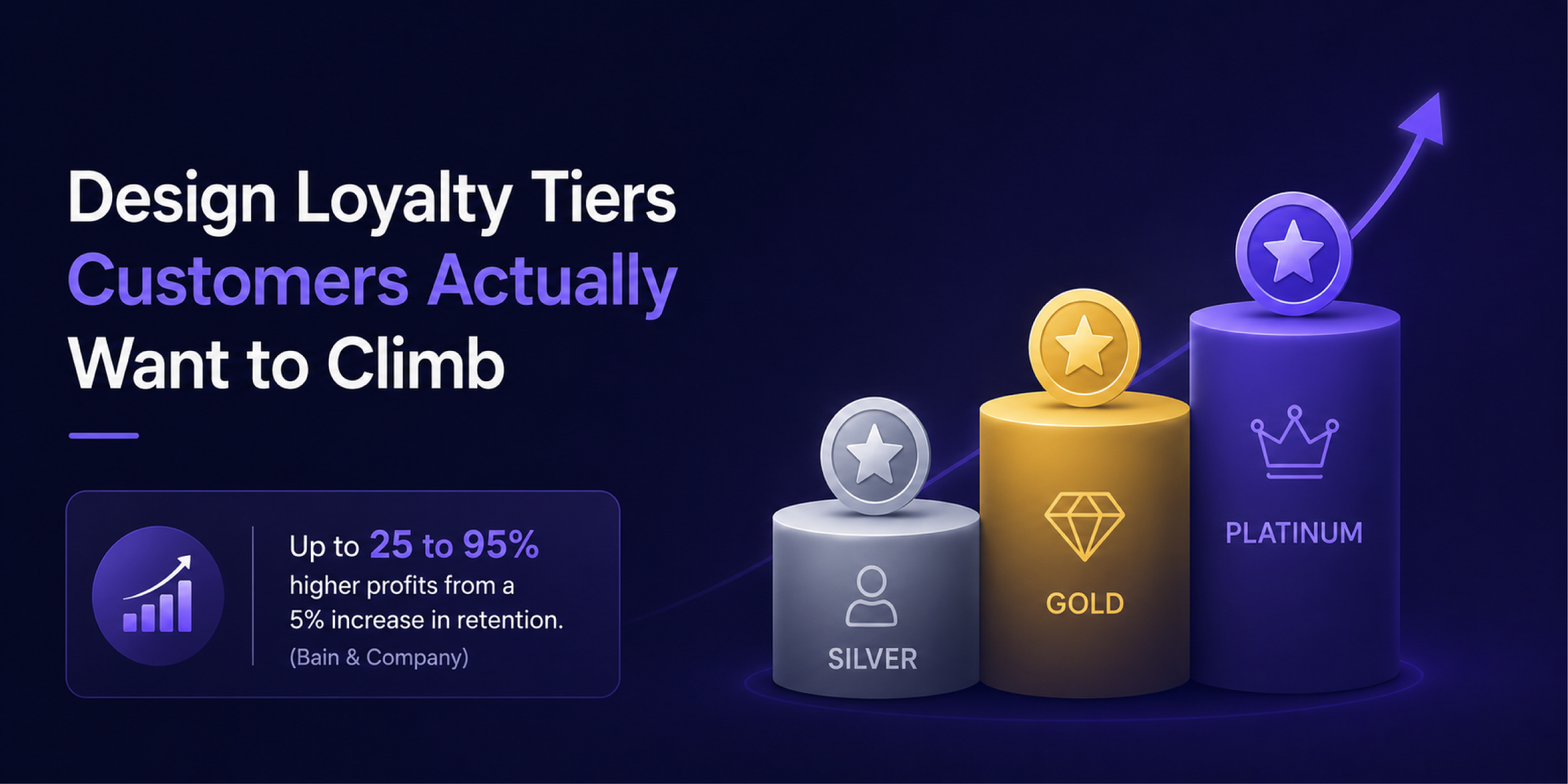
Customer loyalty programmes often promise long term engagement, yet many fail because they reserve meaningful benefits for a small group of top spenders. Bain & Company reports that increasing customer retention by just 5% can increase profits by 25% to 95%, making loyalty one of the highest return investments available to marketers. However, a poorly designed tier structure can reduce participation, increase programme costs, and discourage customers before they reach higher levels.
For marketing leaders, the challenge is not simply creating Silver, Gold, and Platinum tiers. The real objective is designing progression that feels achievable while ensuring every benefit supports profitable customer behaviour.
This guide explains how to structure affordable loyalty tiers, define meaningful thresholds, balance financial and experiential rewards, and measure whether your tier architecture genuinely changes customer behaviour. You will also learn practical approaches that help loyalty programmes scale without creating unsustainable reward costs.
Why Most Tiered Loyalty Programmes Concentrate Value at the Top Tier and Lose Everyone Else
Many loyalty programmes unintentionally create a pyramid where almost all perceived value sits in the highest membership tier. While this approach aims to motivate customers to spend more, it frequently produces the opposite effect. Customers who believe the top tier is unattainable often disengage instead of increasing their spending. According to Bain & Company, customers remain loyal when they experience continuous value throughout their relationship rather than waiting months or years for meaningful recognition.
The psychological gap between aspiration and reality
Behavioural economics shows that customers need regular reinforcement to maintain motivation. Research published by the Harvard Business Review demonstrates that people make greater progress towards ambitious goals when they receive visible evidence of advancement. If customers remain in the entry tier for extended periods without experiencing new privileges, they often stop participating altogether.
This problem becomes even more pronounced when qualification thresholds increase exponentially between tiers. A modest jump from Silver to Gold may appear achievable, but an unrealistic leap to Platinum can reduce motivation for the majority of members.
Every tier should provide a reason to stay
Successful tier structures create incremental improvements instead of dramatic jumps in value.
For example:
This balanced approach encourages customers to keep progressing because each tier delivers tangible improvements rather than symbolic labels alone.
Marketing leaders should also avoid making every benefit monetary. Deloitte's consumer loyalty research consistently shows that convenience, recognition, exclusive access, and personalised experiences often create stronger emotional loyalty than discounts alone. Customers who feel recognised become less likely to compare competitors purely on price.
Platforms such as Rekyndl help organisations build flexible tier structures that allocate benefits dynamically based on customer behaviour, purchase frequency, engagement activities, or campaign participation. This enables marketers to reward progression consistently while maintaining predictable programme costs instead of concentrating the entire rewards budget on a very small group of elite members.
How to Set Tier Thresholds That Are Stretching Without Being Demotivating
Designing tier thresholds is one of the most commercially important decisions in any loyalty programme. Set the bar too low and customers reach premium status without changing their behaviour, reducing programme profitability. Set it too high and customers lose motivation because the next milestone feels unattainable.
Research from Gartner shows that effective loyalty programmes encourage incremental behavioural change rather than demanding dramatic spending increases. Customers respond best when each milestone appears challenging but realistic.
Build thresholds using customer data instead of assumptions
Rather than selecting round numbers, begin with purchasing data.
Segment customers by:
- Average annual spend.
- Purchase frequency.
- Average order value.
- Customer lifetime value.
- Category preferences.
- Engagement beyond purchases.
This analysis reveals natural customer clusters that can become logical tier boundaries.
For example, if most customers purchase four times per year, setting Gold status at five purchases creates an achievable target. Requiring twelve purchases may discourage the majority before they even begin.
McKinsey & Company also recommends designing incentives around customer behaviour rather than revenue alone. Frequency, referrals, product exploration, reviews, and digital engagement all contribute to stronger long term loyalty.
Combine spending with behavioural milestones
High value customers do not always spend the most money. Some actively recommend products, participate in brand communities, or engage with campaigns.
Effective qualification criteria can therefore combine:
- Annual spend.
- Number of purchases.
- Successful referrals.
- Mobile app engagement.
- Completion of loyalty challenges.
- Participation in seasonal campaigns.
This diversified model broadens participation while reducing dependence on discounts.
With Rekyndl, marketing teams can configure multiple qualification rules, automate customer progression, and launch targeted campaigns that encourage movement between tiers based on specific behaviours rather than spend alone. This flexibility allows organisations across retail, hospitality, financial services, travel, and consumer brands to adapt their tier structures without rebuilding the programme each time customer behaviour changes.
Tier Benefits That Create Real Switching Costs: Status vs Monetary vs Experiential Rewards
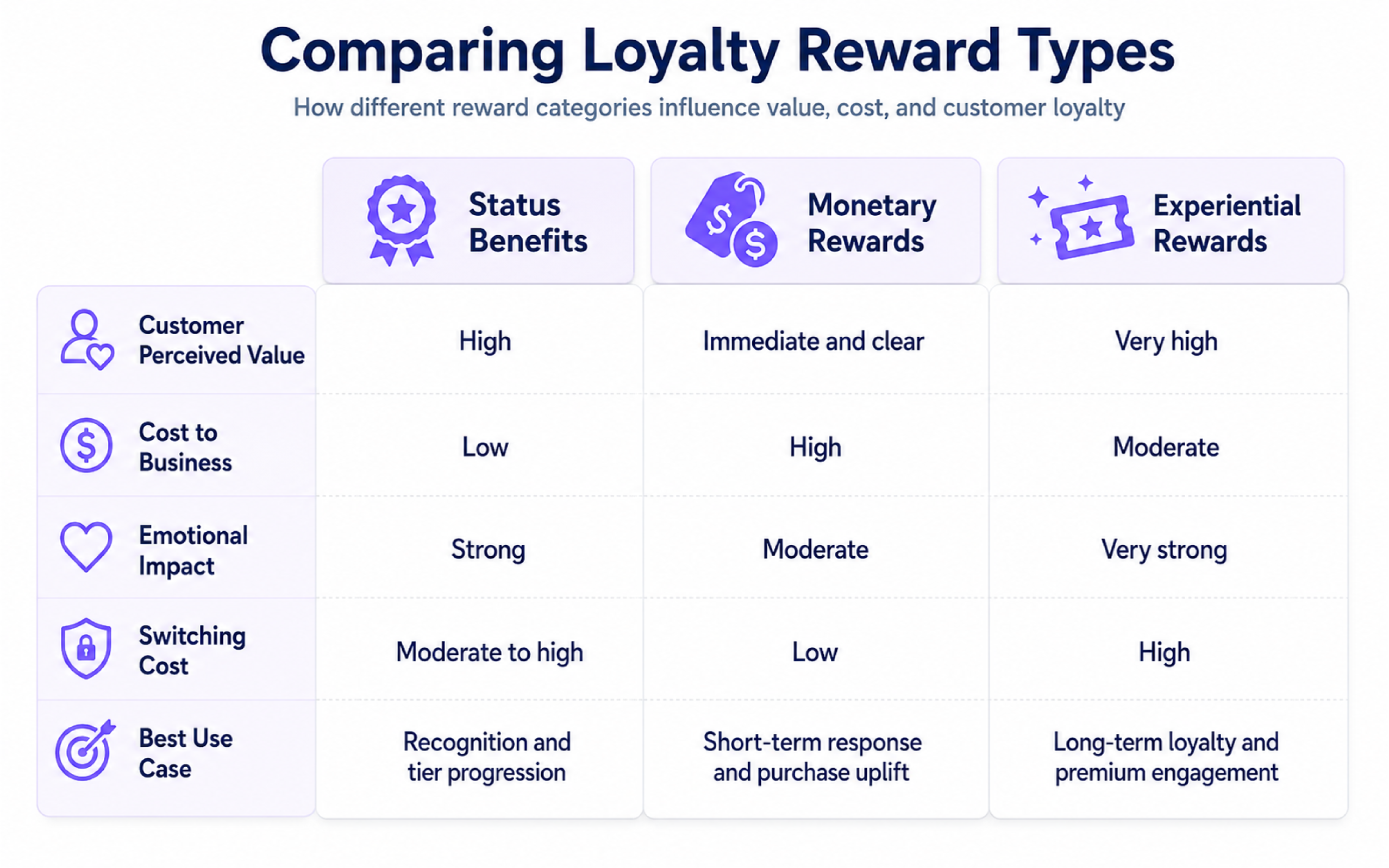
Many organisations assume that larger discounts automatically produce stronger loyalty. Research consistently suggests otherwise. While monetary rewards attract attention, they rarely create lasting emotional commitment. Customers can easily switch brands when another organisation offers a better price.
Bain & Company argues that sustainable loyalty depends on creating reasons for customers to remain beyond financial incentives alone. The most successful programmes combine tangible value with emotional recognition and exclusive experiences.
Comparing different benefit categories
Monetary rewards remain important because customers expect practical value. However, exclusive experiences, priority access, recognition, and personalised treatment frequently generate stronger customer attachment than discounts.
Marriott Bonvoy and British Airways Executive Club illustrate this principle well. Members often value priority services, exclusive privileges, and recognition as highly as financial rewards because these benefits reinforce social status and create memorable experiences.
Building affordable value across every tier
Marketing leaders should distribute different categories of benefits strategically.
Silver members may receive personalised offers and early access to selected campaigns.
Gold members could unlock enhanced service options, exclusive promotions, or accelerated points earning opportunities.
Platinum members may receive premium experiences, concierge style support, priority access, or invitation only events.
This layered approach keeps programme costs under control because not every reward requires direct financial expenditure. Deloitte has found that emotionally rewarding experiences significantly improve customer advocacy and retention compared with purely transactional discount strategies.
A carefully balanced mix of status, monetary value, and experiential rewards creates switching costs that competitors struggle to replicate through pricing alone.
Qualification and Maintenance Rules: How to Set Criteria That Reward Active Customers Without Punishing Life Events
A well designed loyalty programme should reward consistent engagement without making customers feel they have lost everything after a temporary pause. Strict annual requalification rules often create frustration, particularly when customers experience changes such as parental leave, relocation, economic uncertainty, or reduced travel. According to Forrester, loyalty programmes that balance aspiration with flexibility achieve stronger long term participation because customers perceive the relationship as fair rather than purely transactional.
Reward consistency, not perfection
Qualification rules should encourage regular interaction while recognising that customer behaviour naturally fluctuates. Instead of resetting members to the entry tier immediately after they miss a target, introduce a grace period or phased downgrade.
Examples include:
- A three month grace period before tier expiry.
- Rolling twelve month qualification windows instead of fixed calendar years.
- Soft landings that move members down one tier rather than to the starting level.
- Bonus opportunities that help customers retain their status through engagement activities.
These mechanisms preserve goodwill while encouraging customers to re-engage.
Balance commercial goals with customer experience
Gartner recommends that organisations design loyalty rules around long term customer value rather than short term revenue targets. Customers who feel recognised during periods of lower activity often return with stronger engagement once circumstances improve.
Rekyndl enables marketing teams to configure flexible qualification rules, automated reminders, tier expiry notifications, and personalised campaigns that encourage customers to retain or regain status without requiring manual intervention. This approach improves programme transparency while helping organisations protect customer relationships over time.
Accelerator Mechanics: How to Use Bonus Events to Move Customers Between Tiers Faster
Customers respond positively when they believe progress is achievable. Accelerator mechanics create moments where members can earn additional points, complete bonus challenges, or fast track their journey to the next tier. According to McKinsey & Company, loyalty programmes that introduce personalised engagement opportunities generate higher participation than programmes based solely on passive spending.
Create momentum through targeted campaigns
Accelerators should encourage behaviours that support commercial objectives.
Examples include:
- Double points during seasonal campaigns.
- Bonus rewards for purchasing from new categories.
- Referral campaigns with tier progression incentives.
- QR code based in store challenges.
- Anniversary or birthday engagement campaigns.
- Completing profile information or communication preferences.
These events create excitement while reinforcing valuable customer actions.
Match accelerators to business objectives
Avoid offering blanket bonus events that increase programme costs without influencing behaviour. Instead, align each accelerator with a measurable commercial outcome such as increasing purchase frequency, driving repeat visits, or encouraging cross category buying.
Behavioural research from Harvard Business Review shows that visible progress significantly increases motivation. Customers who see themselves moving closer to the next milestone are more likely to continue engaging than those who perceive progression as slow or unpredictable.
With Rekyndl, marketing leaders can automate bonus events through customer segmentation, behavioural triggers, and journey based campaigns. Features such as gamification, QR code interactions, Spin the Wheel campaigns, badges, and automated customer journeys make it possible to introduce accelerators without increasing operational complexity. This creates regular moments of excitement that keep customers engaged throughout the year rather than only during major promotional periods.
Measuring Tier Effectiveness: Which Metrics Show Whether Your Tier Architecture Is Actually Driving Behaviour
Many organisations measure loyalty success by counting enrolments. While membership growth matters, it does not indicate whether the programme changes customer behaviour. Bain & Company advises organisations to evaluate loyalty initiatives through behavioural outcomes rather than participation alone.
Marketing leaders should regularly review a balanced set of commercial and engagement metrics.
Metrics that matter most
No single metric tells the full story. Instead, evaluate trends across multiple indicators to understand whether customers perceive sufficient value to continue progressing.
Forrester recommends combining transactional data with customer feedback to identify friction points within loyalty programmes. If customers consistently stall before reaching Gold or Platinum, the qualification thresholds or benefit structure may require adjustment.
Regular analysis also allows marketing teams to identify underperforming benefits, optimise reward costs, and introduce new engagement opportunities before participation declines. A loyalty programme should evolve alongside customer expectations rather than remain static.
Frequently Asked Questions
What is the ideal number of tiers in a loyalty programme?
Most successful loyalty programmes use three to five tiers. This structure provides meaningful progression without overwhelming customers. Three tiers such as Silver, Gold, and Platinum remain popular because customers easily understand the journey while marketers can differentiate benefits clearly.
How do you decide whether customers qualify through spending or engagement?
The strongest programmes combine both. Spending reflects commercial value, while engagement activities such as referrals, campaign participation, reviews, or repeat visits encourage broader customer interaction. This approach rewards valuable behaviours beyond purchase value alone.
Why do some customers never progress beyond the first tier?
Customers often disengage when qualification thresholds feel unrealistic or when entry level benefits provide little value. Regular progress updates, attainable milestones, and meaningful rewards throughout the journey maintain motivation and encourage continued participation.
Can loyalty tiers work across different industries?
Yes. Retail, hospitality, financial services, travel, healthcare, automotive, and subscription businesses all use tiered loyalty successfully. The qualification criteria and rewards should reflect customer behaviour within each sector rather than follow a standard template.
How can Rekyndl simplify tier management?
Rekyndl allows marketing teams to configure tier rules, automate customer progression, create behavioural segments, launch personalised customer journeys, introduce gamified campaigns, and manage reward redemption from a single platform. This reduces manual administration while making it easier to optimise loyalty performance over time.
Conclusion
The best loyalty programmes do more than reward high spenders. They create achievable progression, recognise valuable customer behaviours, and deliver meaningful benefits at every stage of the journey. Marketing leaders who balance aspiration with affordability build programmes that improve retention while protecting long term profitability.
As customer expectations continue to evolve, flexible and data driven tier design will become an increasingly important competitive advantage. Organisations that continuously refine their loyalty architecture will be better positioned to strengthen engagement, increase customer lifetime value, and build lasting brand preference.
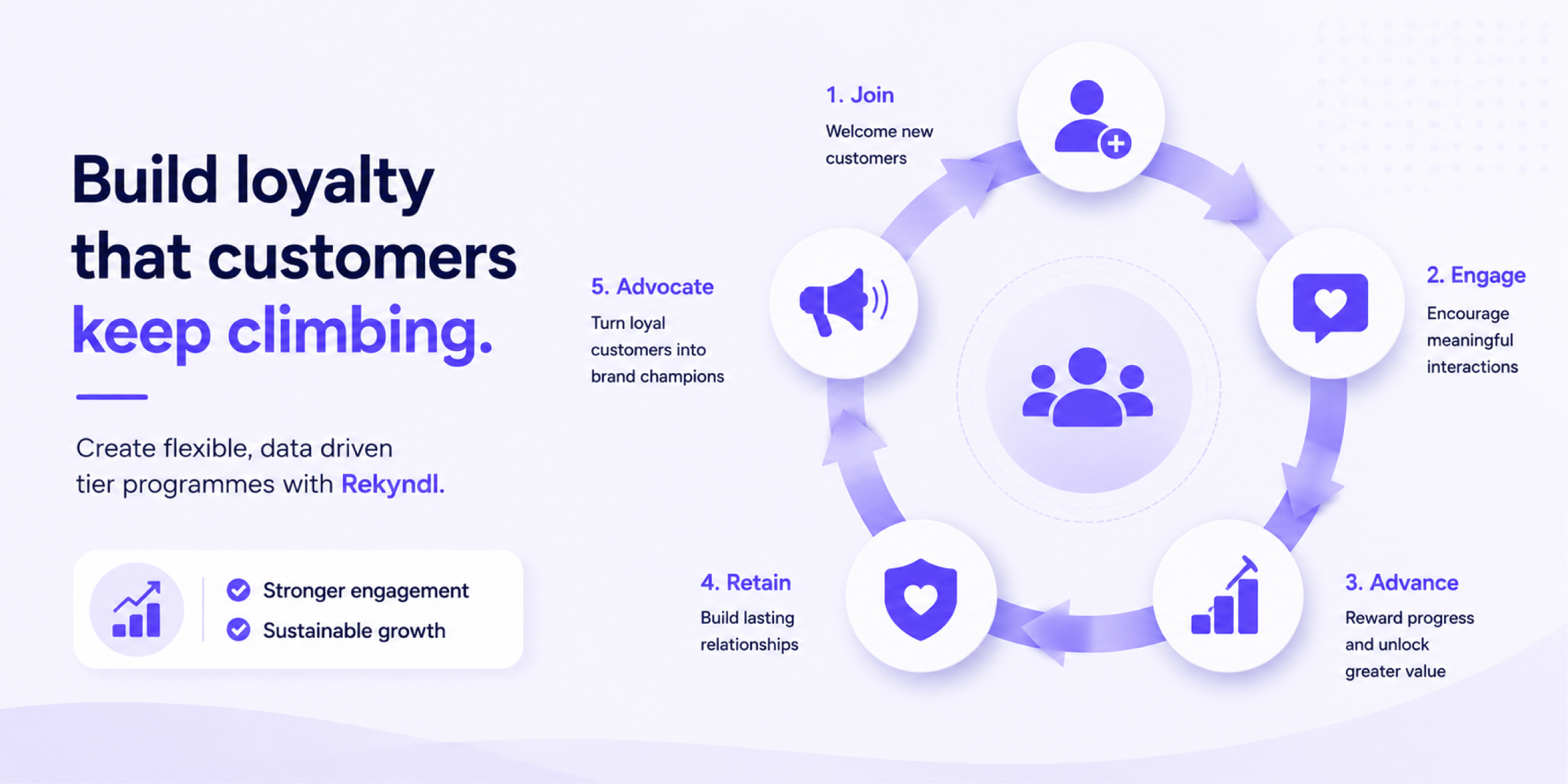
See How Rekyndl Helps You Build Loyalty Tiers That Customers Want to Climb
Design a loyalty programme that balances commercial performance with customer motivation. Explore how Rekyndl helps marketing leaders build flexible tier structures, automate customer journeys, personalise rewards, and measure programme performance.
Explore Rekyndl Features: https://www.therewardstore.com/rekyndl/features
Sign up for our newsletter for trending top content!


