
Festive Season Loyalty Campaigns: How to Run Bonus Points Without Losing Control of Liability

Sign up for our newsletter for trending top content!
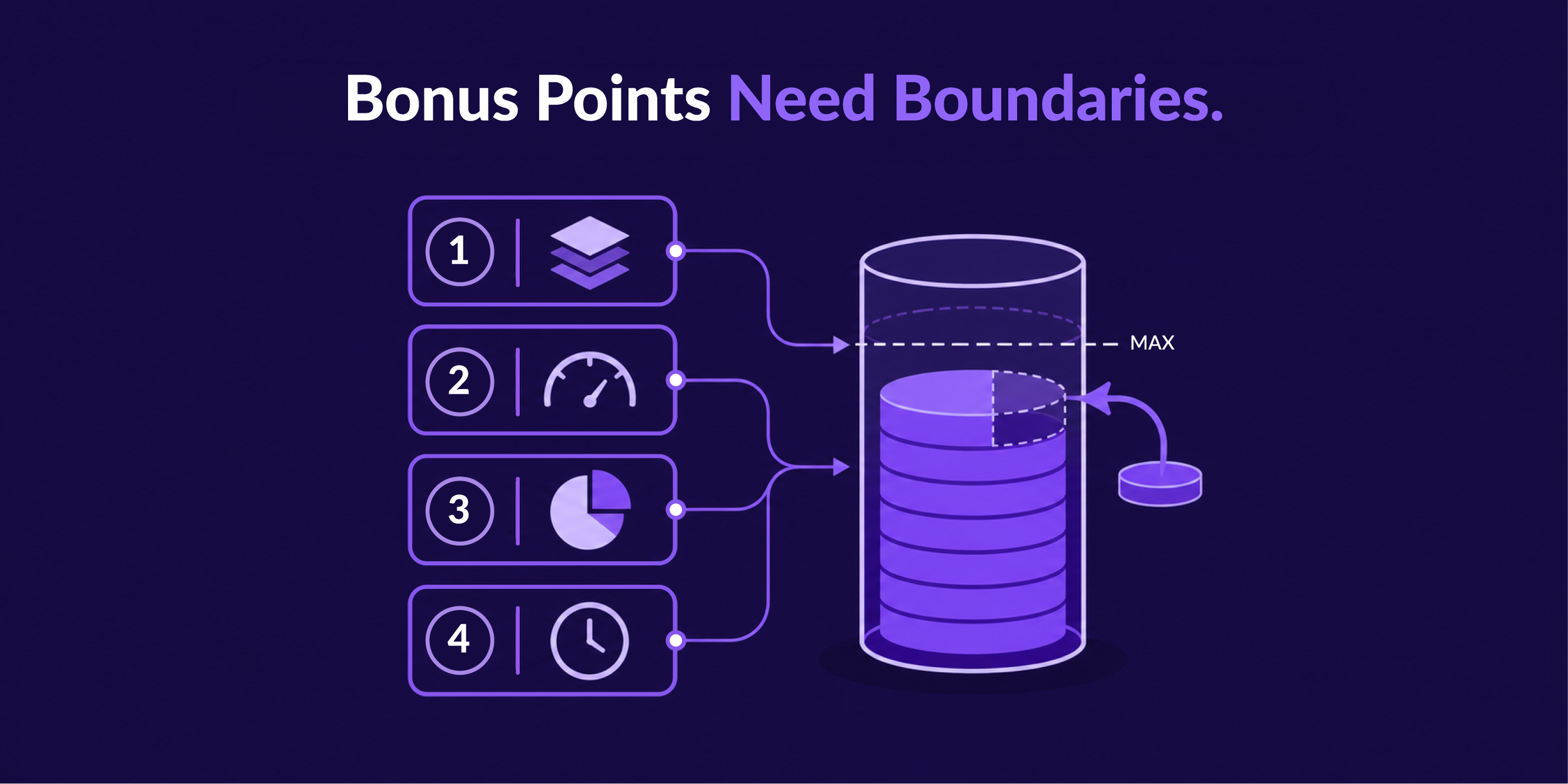
The liability created by festive loyalty campaign bonus points is controlled by four rules fixed before launch. These are which earning rule takes precedence when several apply, how many points a transaction, a member and the programme can earn, how points are reversed when goods are returned, and when unspent points expire. The creative decides how many members take part, while these rules decide what each participant is worth and how long the obligation lasts. Finance should be able to state a maximum exposure before the first bonus point is issued.
Why Festive Bonus Campaigns Create Unplanned Liability
Festive bonus campaigns create unplanned liability because they issue promises faster than finance records them, and because the rules, not the offer, decide how many promises each transaction creates. Points liability is the accounting obligation that records the value of points issued but not yet redeemed or expired. Under IFRS 15, and under Ind AS 115 in India, points that give a customer a material right are treated as a separate obligation, so part of the sale revenue is deferred until the points are used or lapse.
Three mechanisms that widen the gap
Stacking is the first. When base earning, a category bonus, a tier multiplier and a campaign all apply to one purchase, the total depends on whether the rules add or multiply, and a budget built on the headline offer cannot show which. Time shift is the second, because points are issued in the peak while redemption, returns and expiry fall in later quarters. Breakage is the third. Breakage is the share of issued points that are never redeemed, and forecasts usually rest on regular members, whereas a festive offer attracts occasional buyers who redeem differently.
A worked scenario
Consider a regional fashion retailer that offers double points on every category for a festive fortnight. Its finance team budgets the accrual at twice base earning. The loyalty system, however, applies the gold tier multiplier to the doubled amount, and a footwear category bonus is added on top, so top tier members earn well over double. In January, returns reverse only the base points on each order, because the reversal rule predates the campaign. The surplus remains in member balances, and the first expiry run is not due until the following autumn. The creative performed as planned; the rules produced the overrun.
Stacking Bonuses With Explicit Precedence
Stacking should follow a written precedence order that states, for every earning rule, whether it applies to base points, to the running total, or to nothing once a higher rule has fired. Earning precedence is the ordered set of instructions that decides which earning rules apply to a transaction and how their results combine. Without it, the same basket can produce different totals in the point of sale system, the loyalty engine and the member app.
Choosing a stacking model
Evaluation order matters even in an additive model, because a cap applied before a bonus gives a different result from a cap applied after it. A useful diagnostic is to calculate the points for a sample of real baskets by hand, using only the written order, and compare them with the system output. Any difference identifies a rule that is evaluated out of sequence. Whether the rules run in a consumer loyalty platform, a points ledger or a spreadsheet, the written order has to exist first.
Caps per Member, per Transaction and per Programme
A festive campaign needs three separate caps, because each one blocks a different failure. A cap is a limit on the points that can be earned or redeemed within a defined scope and period.
The programme cap is the only one finance can rely on, so it should be set from the approved exposure and not from expected participation. Decide beforehand what happens at the cap: earning stops, the multiplier reduces, or the owner is alerted to decide. A silent stop is the worst outcome, because members discover the end of the offer at the till.
The counter argument
A fair objection is that caps depress the behaviour the campaign exists to encourage, since the best customers reach them first. That is correct. The answer is to set the per member cap high enough that it affects only unusual behaviour, and to review accrual against the programme cap daily, not to remove the cap. Where the offer is limited by a fixed stock of rewards, a separate programme cap may add little.
Clawing Back Points on Festive Returns
Points earned on a purchase should be reversed in proportion when that purchase is refunded, and the reversal must follow the same multipliers that created the points. Clawback is the reversal of points earned on a transaction that is later refunded or cancelled. Festive returns arrive after the campaign closes, so a reversal rule written for ordinary trading often reverses only base points and leaves the bonus in the balance.
Pending points and immediate credit
Pending points are points recorded against a transaction but not spendable until the returns or cancellation window ends. They remove most clawback problems, because points that were never spendable need no recovery. Rekyndl is a consumer loyalty platform from The Reward Store, built on a real time event engine. It can hold points as pending through a returns or cancellation window, and it reverses points proportionally across multipliers when a refund or cancellation arrives.
Pending points are the wrong choice when the returns window is longer than the campaign and members expect an immediate reward, because the points would not become spendable until after the festival has ended. In that case, issue points immediately, limit what a member can spend before the window closes, and reverse proportionally on refund. The cost is that a member can spend points on an order that is later returned, which leaves a negative balance to manage.
Partial returns and negative balances
A partial refund should reverse only the points attributable to the returned items, calculated across every multiplier that applied. Decide before launch whether a negative balance is carried forward, offset against future earning or written off, and who approves a write off.
Timing Expiry So It Does Not Collide With the Next Peak
Expiry should fall in a quiet period and never at the start of the next peak, because a large block of points lapsing just before a peak is usually repaid as complaints, goodwill credits and extensions. Expiry is the rule that removes unspent points from a balance on a fixed date, after a rolling window or after a period of inactivity.
How the model decides the shape of the cliff
A fixed date applied to a festive cohort expires every point at once, which produces a redemption spike beforehand and a surge of service contacts afterwards. A rolling window expires each member’s points a set time after they were earned, which spreads the effect across the year. Inactivity expiry ties the loss to behaviour, and it works best where members transact often enough for inactivity to be meaningful.
The accounting and consent interaction
Extending expiry after launch reverses the breakage that finance assumed, so any extension needs finance approval before it is promised to members. Expiry warnings are also messages, so they must follow the consent and disclosure rules of each market, such as GDPR where it applies, and the programme terms must state the expiry rule in plain words before the member earns.
A Festive Campaign Control Checklist
A campaign should not launch until loyalty and finance have both signed a short list of controls, because each control catches a failure that is costly to repair after the season. Work through the sequence below before the rules are configured in the consumer loyalty platform or points ledger.
- Have the loyalty analyst write the precedence order for every earning rule and test it on a sample of real baskets.
- Set the maximum exposure, in points and in currency value, and obtain approval from the finance controller.
- Set caps per transaction, member and programme, and record the action to be taken at the programme cap.
- Confirm that the reversal rule covers campaign bonuses and tier multipliers, not only base points.
- Decide between pending and immediate credit, and record the returns window on which the decision rests.
- Fix the expiry model and date, and confirm that the date does not fall at the start of the next peak.
- Agree the daily report covering points issued, pending, reversed and accrued against the programme cap.
- Name who may extend the campaign, change a rule or lift a cap during the season, and require finance approval.
- Schedule a reconciliation of points issued, reversed, redeemed and expired against the general ledger after the campaign closes.
Where Rekyndl Fits
A consumer loyalty platform fits at the point where these rules are enforced, because precedence, caps, pending points, clawback and expiry act as controls only when the system applies them to every event. Rekyndl, from The Reward Store, runs earning rules on any behaviour, with base earning, category bonuses, tier multipliers, campaigns, streaks and partner accrual stacked with explicit precedence.
It holds pending points through a returns or cancellation window and supports expiry on a fixed date, a rolling window or inactivity, with warning journeys before expiry. It applies proportional clawback across multipliers and sets caps on earning and redemption per transaction, member or programme. It values points liability daily and forecasts breakage. It does not run employee recognition, channel or distributor incentive programmes, or gift card programmes for retailers.
Frequently Asked Questions
How do I stop double points and tier multipliers compounding in a festive campaign?
Write a precedence order that states whether each rule applies to base points or to the running total, then choose an additive, multiplicative or exclusive model deliberately. Test the order on a sample of real baskets before launch and compare the results with system output. Compounding often occurs because a multiplier is applied after a campaign bonus by default, and nobody decided that sequence.
How should I set a cap on festive bonus points per member?
Start from the exposure finance has approved, divide it across the members expected to participate, and add a margin for the highest legitimate basket. The cap should only affect unusual behaviour such as resale or abuse. Review accrual against the programme cap daily, and decide in advance whether earning stops, the multiplier reduces or the owner is alerted when the programme cap approaches.
Should I claw back bonus points when a customer returns a festive purchase?
Yes, in proportion. Clawback is the reversal of points earned on a transaction that is later refunded or cancelled, and it must follow every multiplier that created the points, including campaign bonuses and tier multipliers. Reversing only base points leaves the bonus in the member’s balance. A partial refund should reverse only the points attributable to the returned items. Configure the reversal rule in the consumer loyalty platform before launch.
When should festive bonus points expire?
Choose an expiry date that falls in a quiet trading period, not at the start of the next peak. A fixed date expires a whole festive cohort at once, a rolling window spreads expiry across the year, and inactivity expiry ties it to behaviour. Warn members before expiry, state the rule in the programme terms, and obtain finance approval before extending any date.
How does Rekyndl stack campaign bonuses with other earning rules?
Rekyndl stacks base earning, category bonuses, tier multipliers, campaigns, streaks and partner accrual with explicit precedence. Earning rules can apply to any behaviour. A real time event engine resolves each event to one member profile, so one event can update the profile, earn the reward, move the tier and trigger the message. Caps on earning can be set per transaction, member or programme.
How should finance account for festive bonus points?
Under IFRS 15, and Ind AS 115 in India, points that give a customer a material right are treated as a separate obligation, and part of the sale revenue is deferred until the points are redeemed or expire. Finance needs the points issued, the points reversed and a breakage estimate. Confirm the treatment with the external auditor before the campaign launches.
Sign up for our newsletter for trending top content!


