
How Behaviour-Based Rewards Are Changing Loyalty Programmes

Sign up for our newsletter for trending top content!
Introduction
According to McKinsey, personalisation can significantly improve customer engagement and revenue outcomes when organisations use customer data to deliver more relevant experiences. Traditional loyalty programmes often focus on rewarding transactions, but modern customers increasingly expect brands to recognise broader interactions and behaviours.
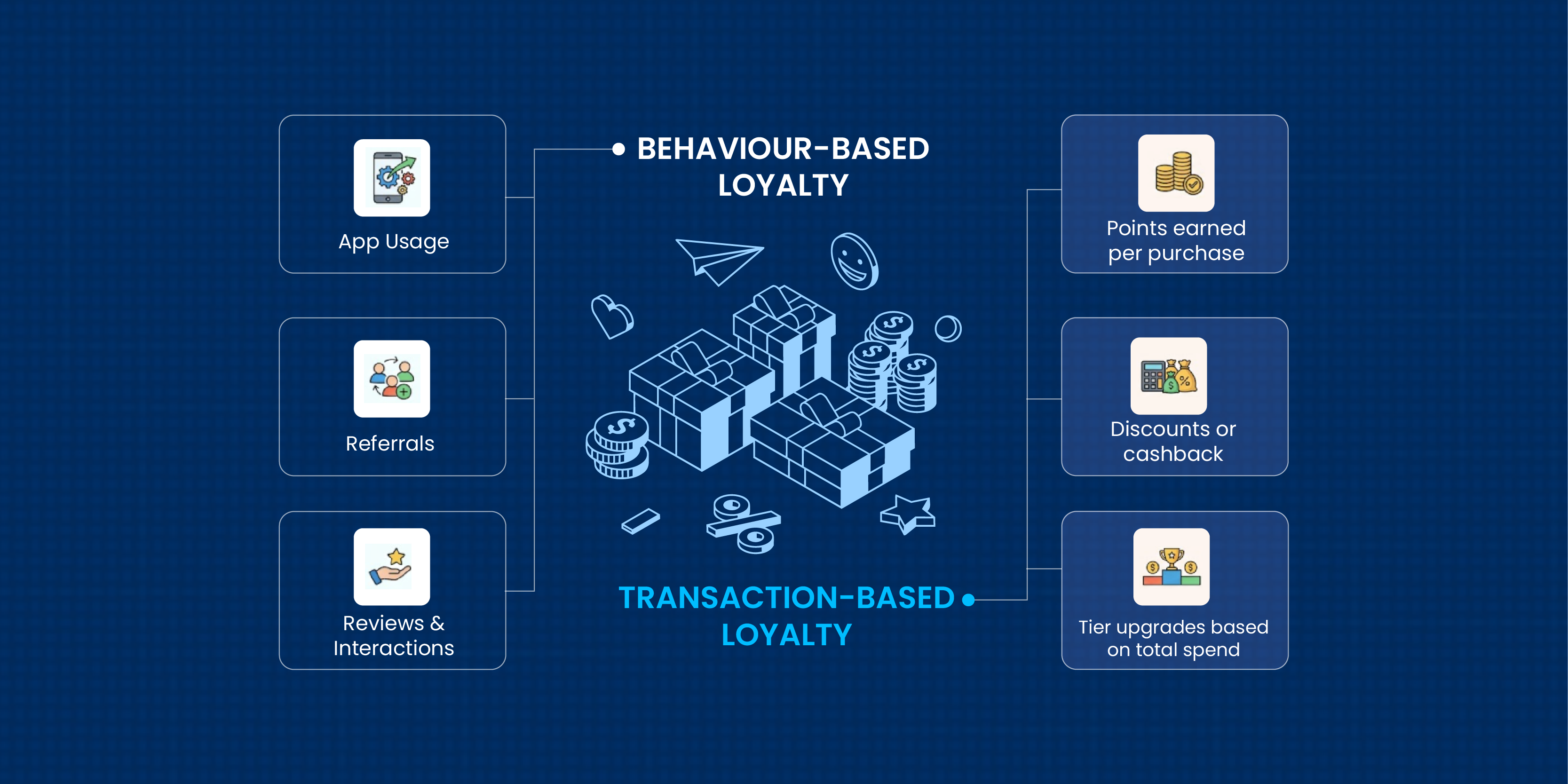
Behaviour-based rewards are changing loyalty programmes by shifting the focus from what customers buy to how customers engage. Actions such as completing onboarding steps, providing feedback, participating in brand communities, referring others, or exploring new services can become meaningful loyalty triggers.
For Marketing Leaders, this approach creates opportunities to build deeper customer relationships, improve retention, and design more effective engagement journeys. This article explains how behaviour-based rewards work, why they outperform purely transactional models, and how automated loyalty platforms enable scalable personalisation.
Why Are Behaviour-Based Rewards Becoming Important for Modern Loyalty Programmes?
Customer expectations have changed significantly. Customers no longer evaluate loyalty programmes only by the value of rewards. They increasingly expect brands to understand their preferences, recognise engagement, and deliver experiences that feel relevant.
According to Deloitte, consumers increasingly value personalised interactions because they create stronger emotional connections with brands. Behaviour-based rewards support this expectation by recognising different stages of the customer relationship.
Traditional loyalty models usually follow a simple structure:
Behaviour-based loyalty expands the definition of customer value. A customer who completes profile information, attends an event, shares feedback, or engages with educational content contributes to the relationship even without making an immediate purchase.
According to Bain & Company, customer loyalty improves when organisations create consistent and valuable experiences throughout the customer journey. Behaviour-based rewards help brands recognise these moments and strengthen customer relationships over time.
For Marketing Leaders, the opportunity is clear: loyalty programmes can become engagement ecosystems rather than simple reward mechanisms.
How Does Behaviour-Based Loyalty Differ from Traditional Points Accrual?
Points-based loyalty programmes have historically focused on rewarding purchase frequency or spending volume. While these models remain valuable, they may overlook important behaviours that indicate customer interest and future value.
Behaviour-based loyalty introduces additional reward triggers that capture broader engagement signals.
Examples include:
According to Forrester, successful customer experience strategies require organisations to understand customer behaviour across multiple touchpoints rather than focusing on isolated transactions.
The difference between points accrual and behaviour-based rewards can be summarised as:
Points accrual asks:
"What did the customer purchase?"
Behaviour-based loyalty asks:
"How is the customer engaging with the brand?"
This distinction allows Marketing Leaders to create more complete customer profiles and deliver more relevant experiences.
For example, a customer who interacts frequently with a brand but has not yet purchased may represent future value. A behaviour-based programme allows organisations to recognise and encourage that engagement instead of waiting for a transaction.
What Customer Behaviours Should Trigger Rewards in a Loyalty Programme?
The most effective behaviour-based rewards programmes identify actions that support both customer needs and business objectives. Marketing Leaders should avoid rewarding every interaction and instead focus on behaviours that indicate genuine engagement or strategic value.
According to Aberdeen Group, organisations achieve stronger performance outcomes when they align customer engagement strategies with measurable business objectives.
A practical behaviour trigger framework includes:
Marketing Leaders should also consider customer journey stages when designing reward triggers.
For example:
- New customers may benefit from onboarding rewards.
- Existing customers may respond to engagement incentives.
- High-value customers may prefer experiential rewards.
- Advocates may value recognition-based benefits.
According to Gartner, customer experience leaders increasingly use behavioural insights to create more proactive and personalised engagement strategies.
The goal is not simply to give more rewards. The goal is to create meaningful interactions that encourage customers to continue engaging with the brand.
How Can Marketing Automation Enable Behaviour-Based Loyalty at Scale?
Behaviour-based rewards become more effective when organisations can identify customer actions, analyse engagement patterns, and respond with timely rewards. Manual loyalty management often limits personalisation because marketing teams cannot efficiently monitor thousands of customer interactions across multiple channels.
According to Gartner, organisations that use customer data effectively can create more relevant experiences and improve customer engagement outcomes. Marketing automation helps brands move from campaign-based loyalty management to continuous, event-driven engagement.
A scalable behaviour-based loyalty framework includes:
For example, a customer completing onboarding activities can receive a relevant reward automatically, while an engaged customer can receive recognition for advocacy or repeat interactions.
According to McKinsey, companies that deliver personalised experiences increasingly rely on technology, analytics, and automation to understand customer intent and improve engagement.
For Marketing Leaders, automation creates the foundation required to operate behaviour-based loyalty programmes at enterprise scale. It enables brands to recognise meaningful customer actions consistently without increasing operational complexity.
How Does Rekyndl Support Automated Loyalty Journeys?
Rekyndl enables organisations to design personalised loyalty journeys by combining customer engagement data, automated workflows, and flexible reward experiences.
The platform supports behaviour-based loyalty by helping Marketing Leaders create journeys based on customer actions and business objectives.
Key capabilities include:
According to Forrester, customer journey management improves when organisations connect customer interactions across multiple touchpoints and use insights to create more relevant experiences.
Rekyndl helps brands move beyond one-time campaigns by enabling ongoing engagement journeys. For example, a customer can receive a reward after completing a milestone, participating in an activity, or demonstrating behaviours aligned with business goals.
The advantage for Marketing Leaders is greater control over customer engagement strategy. Instead of relying only on purchase-based rewards, organisations can build loyalty experiences that encourage discovery, advocacy, retention, and long-term relationships.
How Should Marketing Leaders Design a Behaviour-Based Reward Framework?
A successful behaviour-based loyalty programme requires strategic alignment between customer behaviour, business goals, and reward design. Not every customer action should trigger a reward. The most effective programmes focus on behaviours that create measurable value.
According to Bain & Company, loyalty strategies perform better when organisations understand the relationship between customer experiences and long-term business outcomes.
Marketing Leaders can use a four-step framework:
Examples of strategic behaviour triggers include:
- Completing customer onboarding.
- Engaging with brand content.
- Providing feedback.
- Participating in campaigns.
- Referring new customers.
- Exploring additional services.
According to Deloitte, organisations create stronger customer relationships when they combine data-driven insights with meaningful experiences.
A strong reward framework should also consider customer preferences. Some customers may value experiential rewards, while others may prefer practical reward options. Providing flexibility improves relevance and increases perceived value.
What Are the Key Elements of an Effective Behaviour-Based Reward Strategy?
An effective behaviour-based reward strategy combines customer insight, clear objectives, relevant rewards, and continuous optimisation.
Marketing Leaders should evaluate five essential elements:
According to Deloitte, organisations that use customer insights effectively can create more personalised experiences and strengthen customer relationships.
The reward catalogue also influences programme success. Customers respond better when organisations provide meaningful choices, including categories such as experiential rewards, travel experiences, dining options, merchandise, and gift cards from broad brand networks.
The Reward Store’s integrated storefront supports flexible reward experiences, helping organisations create loyalty programmes that match different customer preferences.
By combining behaviour intelligence with relevant rewards, organisations can transform loyalty programmes into continuous engagement platforms rather than transactional benefit systems.
Frequently Asked Questions
What Is Behaviour-Based Loyalty?
Behaviour-based loyalty rewards customers for meaningful interactions beyond purchases. These behaviours may include onboarding completion, referrals, feedback participation, content engagement, or other actions that indicate stronger customer relationships.
How Do Event Triggers Differ from Points Accrual?
Points accrual typically rewards transactions, while event triggers respond to specific customer actions. Event-based loyalty enables brands to recognise behaviours at the right moment and create more personalised engagement journeys.
What Behaviours Should Trigger Rewards in a Loyalty Programme?
Brands should reward behaviours that support business objectives, such as customer onboarding, advocacy, engagement, repeat interactions, feedback participation, and product discovery. The right triggers depend on the customer journey and programme goals.
Can Rekyndl Support Behaviour-Based Customer Engagement?
Yes. Rekyndl helps organisations create automated loyalty journeys using customer segmentation, marketing automation, journey builder capabilities, and behaviour-based triggers. This enables Marketing Leaders to deliver personalised customer engagement at scale.
Conclusion
Behaviour-based rewards are changing loyalty programmes by shifting the focus from transactions to meaningful customer relationships. Marketing Leaders can create stronger engagement by recognising customer actions, automating personalised journeys, and aligning rewards with strategic objectives. As customer expectations continue to evolve, loyalty programmes will increasingly depend on real-time insights and adaptive experiences that strengthen long-term brand relationships.
Create personalised loyalty journeys based on customer behaviour with Rekyndl. Explore how automated workflows, journey builder capabilities, and flexible rewards can help your brand build stronger customer engagement.
Sign up for our newsletter for trending top content!


